

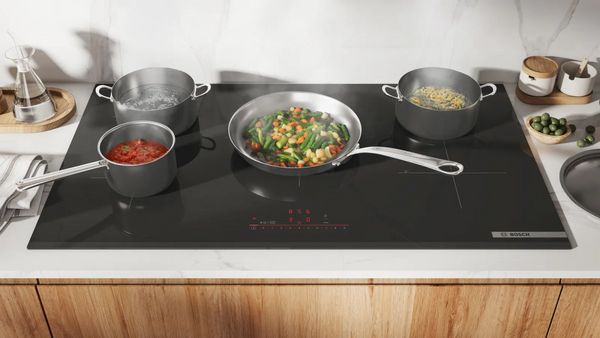
Modern kitchens are transforming thanks to the rise of high-performance cooking surfaces.
The shift toward an induction cooktop is redefining how we think about speed, precision, and efficiency in the kitchen. At Texas Appliance, we’ve seen firsthand how home cooks, from busy parents to serious culinary enthusiasts, are curious about whether the switch is truly worth it.
In this induction cooktop buying guide, we’re going to walk you through everything you need to know before purchasing an induction cooktop, including the mechanics of how it works, induction cooktop pros and cons, which cookware works best, and how to compare induction vs. gas cooktop and electric options.
We’ll also share key induction cooktop cleaning and maintenance tips and highlight top brands to help you envision the perfect upgrade for your home.
How Induction Cooktops Work
One of the most compelling features of an induction cooktop is what happens under the surface: rather than using flames or a traditional heating element, the cooktop uses electromagnetic energy to heat the cookware itself.
In essence, when you place a suitable pot or pan on the cooking zone, an alternating electric current flows through a copper coil beneath the glass-ceramic surface. That current generates a magnetic field, which induces heat in the pan’s metal body.
The result? The cookware becomes the heat source rather than the coil or flame. A big advantage here is that the surface surrounding the cookware stays relatively cool, reducing wasted energy and promoting quicker heat-up and cool-down times.
According to the U.S. Department of Energy, induction devices can be up to three times more efficient than gas and around 10% more efficient than conventional smooth-top electric models.
When considering a new induction cooktop, you’re not just investing in stylish kitchen technology. You’re investing in improved cooking speed and precision, which is exactly what modern home cooks are looking for.
➜ Learn More: Best Induction Range Models of the Year
Pros and Cons of Induction Cooking
Before you decide to make the switch, it’s helpful to look at the clear advantages and also the trade-offs of an induction cooktop.
Pros
Fast heating and highly responsive temperature changes
Because the cookware itself is being heated directly, induction cooktops heat faster, and you have more power over temperature control.
Energy efficiency
Much less heat is wasted compared to gas or radiant electric.
Safety benefits
Cooler cooktop surfaces and automatic shut-off when cookware is removed make your kitchen safer.
Easy cleaning
The smooth glass surface and cool-to-touch surrounding area mean spills are less likely to bake on.
Precision control
This is ideal for tasks like melting chocolate, simmering sauces, or searing steaks, thanks to quick response times.
Cons
Compatible cookware
Only magnetic or iron-based cookware will work properly.
Higher upfront cost
Many induction cooktops and installation requirements can cost more than traditional models.
Dependence on electric power
Since they’re entirely electric, if your power goes out, you’ll lose cooking capability.
Learning curve
If you’re used to gas, you may need to adjust how you control heat or choose cookware.
We always tell our customers: the benefits are compelling, but it’s best to go in with eyes open. The right decision depends on your cooking style, kitchen setup, and readiness to adopt the kitchen technology of induction.
How to Know if Your Pots and Pans Are Induction-Ready
One of the most common questions we hear at Texas Appliance is: “Will my current cookware work with my new induction cooktop?” The good news is there’s an easy way to test.
Start by using the “magnet test”: Take a small magnet and stick it to the bottom of your pot or pan. If the magnet sticks firmly, you’ve got magnetic cookware, and it’s compatible with induction. If it doesn’t stick (or only weakly sticks), then the cookware likely won’t work unless it has a magnetic layer built in.
Simply put, cookware for induction cooktops must contain enough iron to be magnetic. Here are common materials and how they fare:
- Cast iron: Excellent compatibility.
- Stainless steel (magnetic grade): Good.
- Enameled iron or some multi-layered pans: Often good if the base layer is iron or magnetic.
- Aluminum, copper, glass: Typically not compatible, unless specially designed with a magnetic base layer.
If you find you need to upgrade cookware, consider it part of the investment in stepping up to induction.
Induction Cooktop Safety and Maintenance
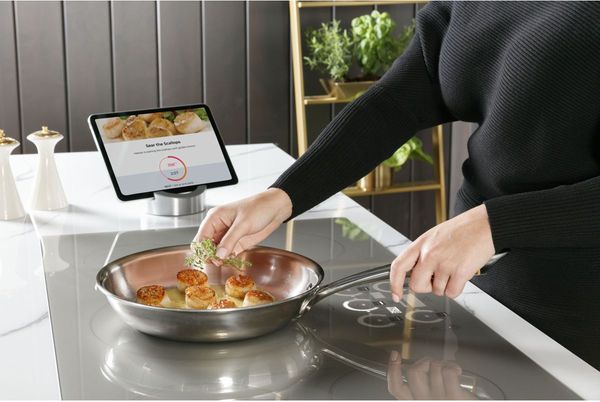
Safety and maintenance are two of the distinct advantages of an induction cooktop. Let’s cover what you need to know.
Safety
Because the heat is generated within the cookware rather than on the cooktop surface, the surrounding glass-ceramic remains cooler, which means reduced risk of burns. Many models also include features like auto shut-off when the cookware is removed, pan detection, and residual heat indicators. This makes induction particularly attractive for households with children or others concerned about kitchen safety.
Maintenance & Cleaning
One of the great benefits of an induction surface is how easy it is to clean. Because the surface stays relatively cool, spills are less likely to bake on, making them easier to wipe off. It’s as simple as using a soft cloth and a mild cleaner. Make sure to avoid harsh abrasives or steel wool that can scratch the glass. To prolong the life of your cooktop, avoid sliding heavy pans across the surface, and lift them instead to minimize scratches.
This combination of safety and ease of maintenance helps make the induction cooktop a strong choice for modern kitchens.
➜ Learn More: Jenn-Air Cooktop Reviews + Top Picks
Induction vs. Gas vs. Electric: Which Cooktop Is Best?
When you’re choosing a cooktop, one question always rises to the top: how does induction compare to more traditional gas or electric models? Below, we compare the options across key categories.
| Feature | Induction Cooktop | Gas Cooktop | Electric Cooktop |
|---|---|---|---|
| Heating Speed | Very fast; heat transfers directly to cookware. | Fast heating, but indirect heat from the flame. | Slower to heat up and cool down. |
| Efficiency | Very efficient (up to ~90% energy transfer). | Lower efficiency with heat lost to surroundings. | Moderate efficiency with some heat loss. |
| Control & Precision | Excellent, highly responsive adjustments. | Good control; less precise at very low heat. | Slower response and less precise temperature control. |
| Cookware Needs | Requires magnetic cookware to function. | Compatible with almost any cookware. | Works with most cookware types. |
| Surface Temperature & Safety | Stays cooler; safer for homes and families. | Open flame increases burn and fire risks. | Hot surface poses burn risk. |
| Cleaning & Maintenance | Smooth surface makes cleaning easy. | Burners and grates require more cleaning effort. | Flat surface; spills can bake on. |
| Familiarity & Feel | Modern feel with a mild learning curve. | Traditional, familiar cooking experience. | Common and widely familiar. |
| Upfront Cost | $$$ | $$–$$$ | $–$$ |
If your priority is speed, precision, and modern kitchen technology, then the induction cooktop stands out. The average time it takes to bring a pint of water to a boil is 70 seconds, compared to 124 seconds for gas and 130 seconds for electric.
For cooks who prize real-time flame control or have existing cookware and infrastructure geared for gas, a gas cooktop might still feel right.
And if budget or cookware compatibility is a concern, a traditional electric cooktop might serve well, but with some trade-offs in responsiveness and efficiency.
At Texas Appliance, we walk customers through this comparison to help determine which cooking surface best aligns with their lifestyle, kitchen infrastructure, and long-term goals.
Top Induction Cooktops to Upgrade Your Kitchen
Here are several standout models from Texas Appliance. Each offers its own strengths, and each brings the power of an induction cooktop into your home.
Café 30” Black Induction Cooktop
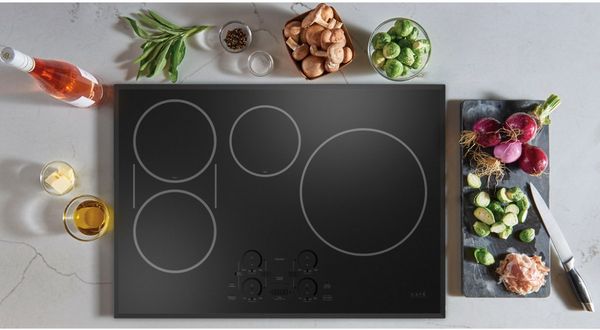
Shop Café 30” Black Induction Cooktop
Ideal for serious home chefs who love precision and guided cooking, this Café 30” induction cooktop offers smart technology and lightning-fast heat control.
With 19 heat settings, responsive touch controls, and guided recipes, it brings gourmet precision to everyday meals, all on a smooth, easy-to-clean surface.
Top Features
- Guided Cooking with smart pan compatibility
- Precision Temperature Control (100–500°F range)
- Rapid Boil function for faster heat-up times
SKS 36” Black Glass Induction Cooktop with Flex Cooking Zones
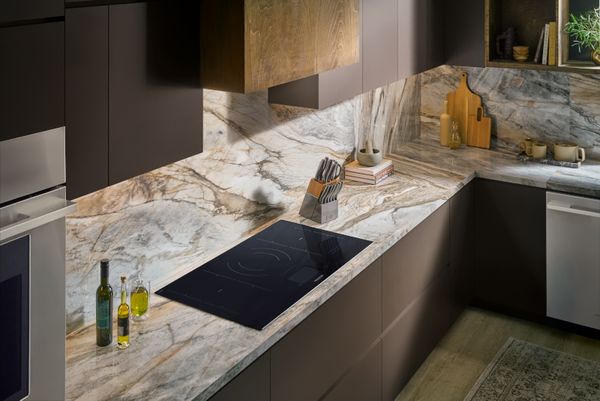
Shop SKS 36” Black Glass Induction Cooktop
Perfect for modern kitchens and design enthusiasts, this Signature Kitchen Suite induction cooktop combines power, flexibility, and style.
The 7” color LCD touch display and ultra-thin profile deliver seamless control and a luxury look, while Wi-Fi connectivity enhances smart home integration.
Top Features
- 7,000W dual center element for rapid boiling
- Dual Flex Cooking Zones for versatile cookware
- Wi-Fi-enabled with ThinQ smart control
GE Profile 36” Stainless Steel Induction Cooktop
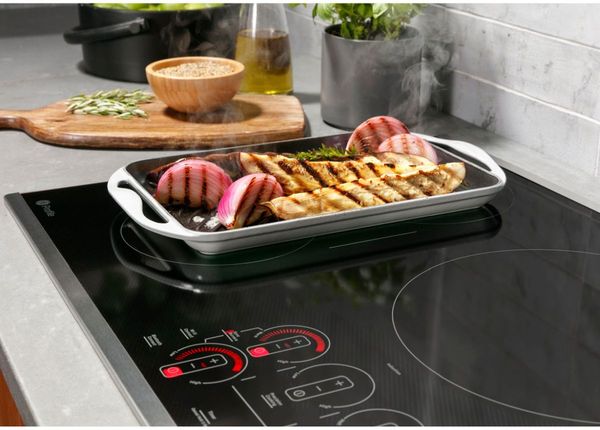
Shop GE Profile 36” Stainless Steel Induction Cooktop
A dream for tech-savvy families and multitaskers, this GE Profile induction cooktop offers speed, smart control, and safety in one sleek design.
Its guided cooking technology and Wi-Fi connectivity simplify meal prep, while induction elements ensure precise, efficient heating every time.
With its sleek layout and intuitive controls, it seamlessly elevates both your kitchen’s look and your daily cooking experience.
Top Features
- Precision Temperature Control with smart pan compatibility
- Built-in Wi-Fi with SmartHQ app integration
- Synchronized Elements for larger cookware
LG Studio 36” Black Induction Cooktop
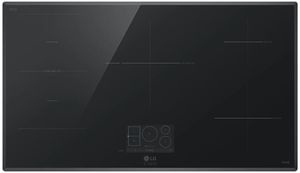
Shop LG Studio 36” Black Induction Cooktop
Designed for busy households and frequent entertainers, the LG Studio induction cooktop delivers serious power and adaptability.
With a 6,000W dual center burner and Flex Zone capability, you’ll enjoy quick, even cooking across multiple dishes, and you can control everything with the sleek 7” LCD. Its refined design brings a modern, professional touch to any kitchen setup.
Top Features
- 6,000W dual center induction burner
- Flex Zone for versatile cookware combinations
- 7” LCD touch display for intuitive control
Bosch Benchmark 36” Black Induction Cooktop
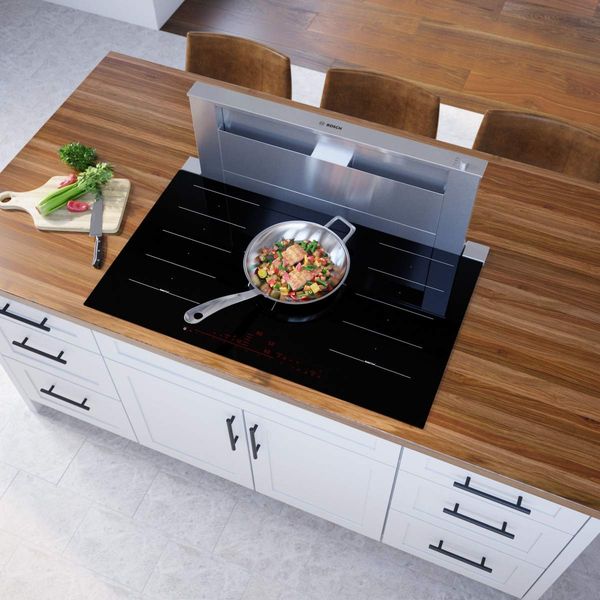
Shop Bosch Benchmark 36” Black Induction Cooktop
Best for precision-focused cooks who crave flexibility and smart convenience, the Bosch induction cooktop turns every meal into a controlled masterpiece.
With FlexInduction and AutoChef technology, it automatically regulates temperature and power levels for perfect results, every time. Its minimalist, premium design seamlessly elevates any modern kitchen.
Top Features
- FlexInduction zones for larger cookware
- AutoChef sensor for consistent frying results
- Home Connect smart monitoring and control
Frigidaire Gallery 36” Black Induction Cooktop
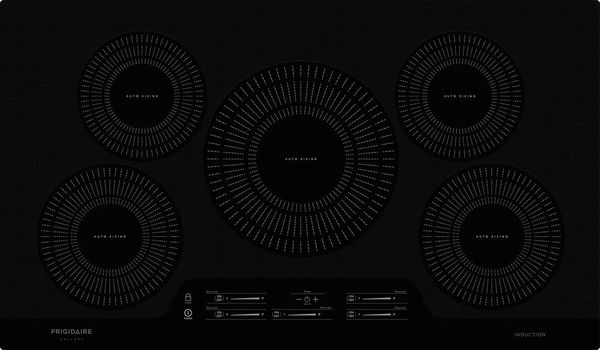
Shop Frigidaire Gallery 36” Induction Cooktop
A top pick for families and everyday cooks, this Frigidaire Gallery induction cooktop balances safety, simplicity, and affordability.
Its Auto Sizing Pan Detection and cool-to-the-touch surface make it easy to use and clean, while even heat distribution ensures perfect results from pancakes to pasta. It’s a practical, budget-friendly upgrade that fits effortlessly into busy household routines.
Top Features
- Auto Sizing Pan Detection for efficient heating
- True Temp Melt & Hold for delicate ingredients
- Safe Surface that stays cool to the touch
Upgrade to Modern Cooking with Induction Technology
Transitioning to an induction cooktop means embracing faster cooking times, increased precision, and enhanced energy efficiency. But it also means choosing compatible cookware, understanding new control styles, and committing to a cooktop type aligned with your kitchen lifestyle.
At Texas Appliance, we’re here to walk you through every step, from assessing your cookware for compatibility to helping you compare induction cooktop vs. electric cooktop and gas options, and guiding you through installation, features, and maintenance.
If you’re ready to upgrade your cooking experience and invest in the next generation of kitchen technology, we invite you to visit us, try out live demonstrations, and let our experts help you find the right model for your kitchen.
➜ Learn More: Thermador vs Viking Cooktop: How to Choose
Frequently Asked Questions
You’ll want to understand how the technology works (magnetic-based heating), evaluate whether your current cookware qualifies, compare installation and electrical requirements, decide which features matter to you (like zones, bridging, smart connectivity), and balance upfront cost with the long-term benefits of efficiency and performance.
Use the “magnet test” described earlier: place a magnet on the bottom of your pan. If it sticks firmly, you’re good. Cookware made of cast iron or magnetic stainless steel works well; cookware made purely of aluminum, glass, or copper typically will not unless it has a magnetic base layer.
Since the glass-ceramic surface remains cooler, you can wipe up spills with a damp cloth as soon as it’s safe. Avoid dragging heavy pans across the surface, use soft cloths and mild cleaners rather than abrasive scrubbers, and promptly clean sugary or sticky spills before they bond to the surface.
No, induction cooktops tend to use less overall energy for cooking. Because heat is generated in the cookware and not wasted heating the air or the cooktop surface, they can be up to three times more efficient than gas and around 10% more efficient than traditional electric models.
Compared to gas, induction offers faster heating, more efficient energy use, cooler surrounding surfaces, and less wasted heat—all while requiring compatible cookware and a dedicated electrical circuit. Gas still offers flame visibility and a familiar feel for many cooks, but comes with more wasted heat and higher ventilation demands.
Yes, a portable induction cooktop is a great way to access the benefits of induction in a compact form, such as for apartments, RVs, second cooking zones, or temporary setups. Just be aware that while they bring the induction advantages of speed, precision, and energy efficiency, they may have fewer features and lower power levels than built-in full-size models.
Why Trust Texas Appliance?
With roots back to the 1950s, Texas Appliance is an established, locally owned and operated, residential major appliance retailer serving both residential and builders’ needs. Our 4 locations allow us to offer a full spectrum of appliances to meet your every need. With over 40 major quality brands, Texas Appliance has one of the largest displays of built–in and free–standing appliances in the state of Texas.
We will be the best appliance dealer in our markets by exceeding our customers' expectations in every way. We will treat our customers, vendors and fellow employees with respect, honesty, integrity, and appreciation. The difference between a "Good" company and a "Great" company lies in its' employees' determination.
Shop Induction Cooktops at Texas Appliance
Stop by Texas Appliance’s Fort Worth Store and Outlet locations to see what a difference buying local with an experienced staff can make. Or shop cooktops online! Our friendly experts are always happy to help you find the best induction cooktop for your kitchen — whether you call us at 817-299-2800, use our online chat feature, or visit us in person.