

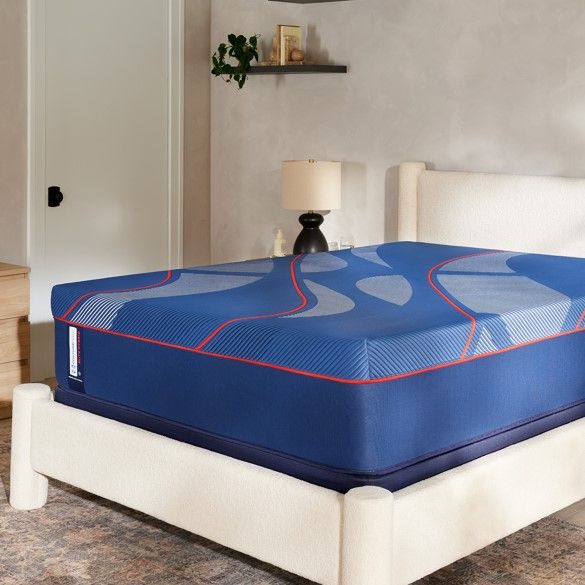
It is 4:07 a.m. and you roll from your back onto your side, and your hip drops into a shallow trough in the middle of the bed that was not there three years ago. You shift twice, wedge a pillow under your knee, and fall back asleep at a bad angle. By 6:30 the alarm goes off and your lower back needs a hot shower and most of a second cup of coffee before it loosens up. Nothing about that is dramatic enough to send you to a doctor, and that is exactly why people live with it for years. It is also the single most common reason a shopper starts looking at a Sealy Posturepedic, because that line was built around one idea: hold the heaviest part of your body up instead of letting it sink.
Lie Down on a Sealy Posturepedic Before You Buy It
Our sleep specialists match firmness to your body type and sleep position, then let you test the exact model you are considering in one of our showrooms. Shop Sealy mattresses with delivery, setup, and old mattress removal across the Dallas-Fort Worth metroplex.
The encouraging part is that a sagging bed is a solvable problem with a well-understood fix, and you do not need to guess your way through it. At Texas Appliance, our team has spent decades helping metroplex shoppers work through this exact decision, lying down on real beds in our showrooms rather than clicking through star ratings. This guide covers how the Posturepedic support system is actually built, the six signs it matches how you sleep, how the collection tiers compare, how to pick firmness by sleep position and body weight, the honest trade-offs, what ownership looks like from delivery day forward, and the specific models worth putting on your list.
Key Takeaways
- Support and firmness are two different decisions: Support is structural and comes from the coil system. Firmness is how the surface feels in the first inch or two, and you choose it separately based on position and body weight.
- The center third does the heavy lifting: Posturepedic models reinforce the coils under your hips and torso, which is the zone that sags first on an aging mattress and the zone that pulls your spine out of line.
- The collection name never tells you the feel: Two beds both labeled Posturepedic Plus can feel completely different, because the collection sets the support system while the comfort feel and the build type set the feel.
- Ten minutes per bed, in your real sleep position: Thirty seconds on a showroom floor tells you nothing except whether the cover feels nice against your hand.
What Is a Sealy Posturepedic Mattress? Collections, Coils, and Zoned Support Explained
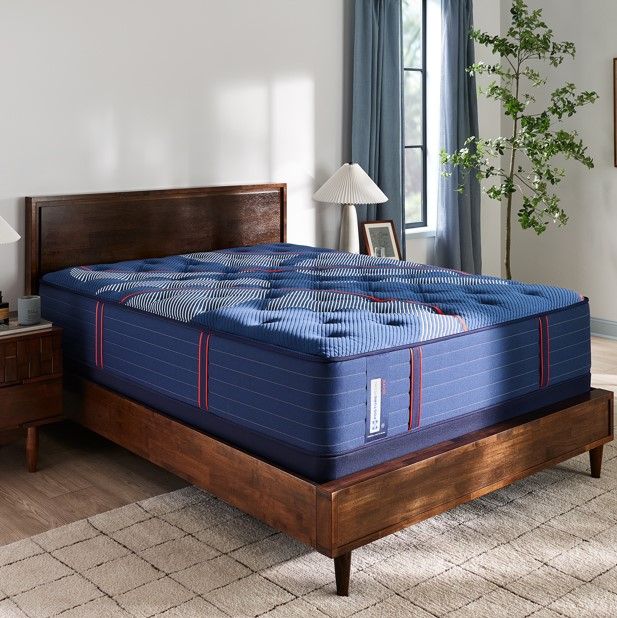
A Sealy Posturepedic is a support-focused mattress family engineered around a reinforced center third, where the coils under your hips and torso are firmer than the coils under your shoulders and feet. The goal is to keep your spine in a roughly neutral line instead of letting the heaviest part of your body settle lower than the rest. That center-third reinforcement is the through-line across every model in the family, no matter what the price tag says.
The Collection Tiers, From Entry to Premium
Sealy organizes the line into tiers, and the tier name on the showroom tag tells you where a bed sits in the range:
- Sealy Posturepedic: the core collection and the entry point into the zoned support system.
- Sealy Posturepedic Plus: a step up in coil quality and comfort layer depth.
- Sealy Posturepedic Pro: more coils, deeper foam, and stronger edge reinforcement.
- Sealy Posturepedic Elite: the top of the range, with the most zoning and the most premium cover materials.
You will also see support and comfort tier names such as PosturePremier and Posturepedic Plus printed on spec tags, which is a known source of shopper confusion because the same words appear in two different roles. Series and tier names get updated periodically, so it is worth confirming the current naming against Sealy spec sheets or the live product page before you commit.
What Actually Changes as You Move Up
Four things change as you climb the tiers, and they are the four things worth asking about on any tag. Coil count and coil quality go up, with entry-tier queens commonly running somewhere around 700-plus coils and higher tiers climbing past 1,000. The memory foam and gel foam comfort layers get deeper and denser. Edge reinforcement gets more substantial. And the cover moves from a basic knit to a cooling treatment.
Here are the technologies you will see repeated across the tags, each in plain language:
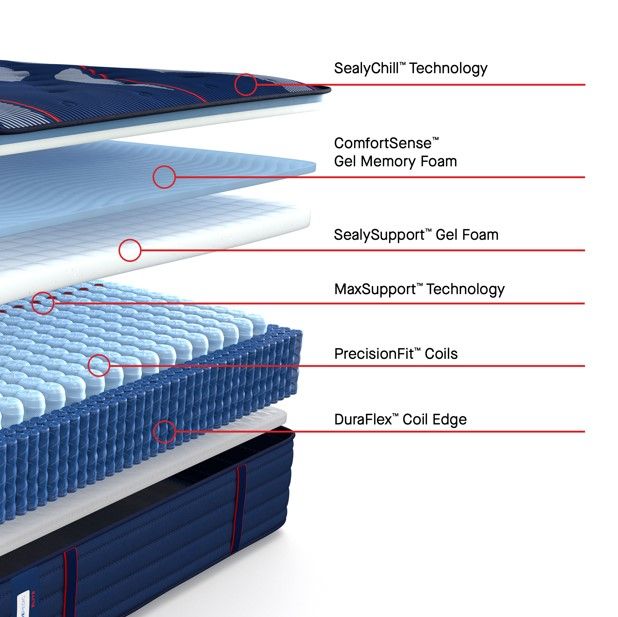
- PrecisionFit Coils: individually wrapped coils tuned to respond to pressure in specific areas rather than as one connected unit.
- Zoned or targeted center-third support: firmer coils placed under the hips and torso where body weight concentrates.
- DuraFlex and DuraFlex Pro Coil Edge: a flexible coil-based perimeter that firms up the edge so you can use more of the surface.
- SealyCool Gel Foam: a gel-infused foam layer that pulls heat away from the surface.
- ComfortSense Gel Memory Foam: a contouring memory foam layer with gel worked in to slow heat buildup.
- SealyChill cooling cover: a cover knit designed to feel cool to the touch when you first lie down.
- Surface-Guard Technology: a treated cover and layer package aimed at moisture and surface cleanliness.
Why the Label Alone Cannot Tell You How a Bed Feels
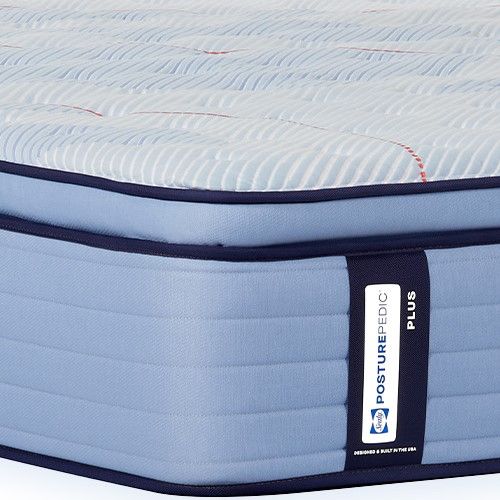
Every Posturepedic model comes in either a spring build or a hybrid build, and in multiple comfort feels. That means two mattresses can both read Posturepedic Plus on the label and feel like completely different beds under your body. The collection sets the support system underneath you. The comfort feel and the build type set what you actually feel on top. Competitors blur this constantly, and it is the number one reason shoppers buy the right collection in the wrong feel.
Read more:
- 5 Best Sealy Mattresses for Different Sleep Needs
- Types of Mattresses Compared: Euro Top vs. Pillow Top vs. Tight Top
Six Clear Signals This Mattress Matches How You Actually Sleep
Fit matters more than tier here. If several of the following describe your nights, this line deserves a spot on your short list.
1. You Wake Up Stiff and Loosen Up by Mid-Morning
Stiffness that is worst in the first thirty minutes of the day and gone by ten o’clock usually points at the sleep surface rather than at an injury. When the middle of a mattress loses its structure, your hips settle lower than your shoulders and ribcage, and your lower back spends seven hours holding a shallow curve it was never meant to hold that long. Reinforced center-third coils push back harder exactly where that sag starts, which keeps the hip line closer to level with the shoulder line. That small change in angle is the entire point of zoned support, and it is the symptom this line was designed around.
2. You Sleep on Your Back, Your Side, or Both
The medium and medium-firm feels in this family are aimed squarely at back and side sleepers, which happens to cover the large majority of adults. Back sleepers need the lumbar curve filled without the hips dropping. Side sleepers need the shoulder and hip to sink enough that the spine stays straight from neck to tailbone. A medium or medium-firm build with zoned coils splits that difference well. Dedicated stomach sleepers and heavier body types are usually better served by the firm builds in the same line, where the hips get held higher and the surface gives up less.
3. Your Partner’s Movement Wakes You Up
Fabric-encased individually wrapped coils compress mostly where the weight lands instead of transmitting that motion across the whole bed. That is the mechanical difference between waking up when someone rolls over at 3 a.m. and sleeping straight through it. Reinforced coil edges matter here too, and for a reason people underestimate. A weak perimeter means the outer few inches of the bed feel like they are about to dump you off, so both of you drift toward the middle. A firm edge gives a couple back real usable width on a queen.
4. You Sleep Hot on an All-Foam Bed
Air moves through a coil unit. It does not move through a solid block of foam. That single fact explains why a hot sleeper who was miserable on an all-foam mattress usually does better on a hybrid, where the coil layer underneath keeps air circulating while the foam above still contours. Cool-to-the-touch cover knits and gel-infused foam add to the effect at the surface. Be realistic about the ceiling, though. No mattress makes a hot sleeper cold, and a bed that sleeps neutral instead of warm is a genuine improvement rather than air conditioning.
5. You Want Pushback, Not a Sink-In Hug
Some people love the slow, enveloping feel of dense memory foam. Others hate it, and the complaint is almost always the same: turning over feels like work, and getting out of bed feels like climbing out of a hole. Coils rebound fast. That responsiveness makes repositioning easier for combination sleepers and makes getting in and out of bed noticeably easier for older sleepers or anyone with limited mobility or joint pain. If the phrase stuck in the bed describes your last mattress, a coil-based Posturepedic is pointed at your problem.
6. You Want a Known Name at a Mid-Range Price
This line sits in the middle of the market on purpose. You get a recognized support story, a full size run from twin through split California king, and a 10-year limited warranty on most models, without paying luxury-tier money. Just as importantly, this is a bed you can go lie down on locally. Buying a mattress sight unseen from a website means finding out whether the firmness works after it is already in your bedroom, and returns on a bed-in-a-box are rarely as simple as the ad copy suggests.
Who Should Keep Looking
Honesty helps more than a hard sell here. Dedicated stomach sleepers who want a plush surface are chasing two goals that fight each other, and this line will not solve that. Memory foam purists who genuinely want the deep contouring hug will find even the softest coil builds too responsive. And sleepers over roughly 250 pounds should look specifically at heavy-duty or firm builds, since softer comfort layers compress further under more weight and can bottom out.
Sealy Posturepedic vs Posturepedic Plus vs Pro vs Elite: Collection Comparison
The tiers differ in measurable ways, not just in marketing language. Use the table below to place any tag you see on a showroom floor.
| Collection | Typical Queen Coil Count | Zoned Support Coverage | Comfort Layer Materials | Edge Support System | Cover Technology | Available Feels | Typical Queen Price Range |
|---|---|---|---|---|---|---|---|
| Sealy Posturepedic | Roughly 700 to 900 | Reinforced center third | Basic gel foam and fiber | Standard reinforced perimeter | Standard knit or SealyCool foam | Firm, medium, plush | Roughly 600 to 1,100 dollars |
| Sealy Posturepedic Plus | Roughly 800 to 1,000 | Center third plus wider reinforced band | ComfortSense gel memory foam | DuraFlex coil edge | SealyChill cover options | Firm, medium, soft, euro top | Roughly 900 to 1,600 dollars |
| Sealy Posturepedic Pro | Roughly 900 to 1,100 | Extended precision coil zoning | Deeper gel memory foam layers | DuraFlex Pro coil edge | SealyChill plus Surface-Guard | Firm, medium, soft, pillow top | Roughly 1,300 to 2,200 dollars |
| Sealy Posturepedic Elite | Roughly 1,000 and up | Precision zoning along more of the length | Thickest gel and memory foam package | DuraFlex Pro coil edge | SealyChill plus Surface-Guard | Full range, tight top through euro top | Roughly 1,800 to 3,000 dollars |
Coil counts and pricing move with model year and promotions, so treat these as ranges to orient yourself and confirm the numbers on the live product page for the exact model you are considering. Entry-tier queens commonly start right around the 599 dollar mark at retail.
Three takeaways from the table:
- For a guest room used a couple dozen nights a year, the core Sealy Posturepedic collection is the sensible stopping point. Paying for extended zoning on a bed nobody sleeps in nightly is money spent in the wrong place.
- For a primary bedroom used every night, Plus or Pro is where the value sits. Deeper comfort layers and stronger edges are what hold up under 2,500 nights of use.
- For couples with a real body weight difference, the higher tiers earn their price. More coils and extended zoning mean the heavier partner compresses through more material before reaching the support core, so both people experience something closer to the same bed.
How to Choose Your Sealy Posturepedic Firmness by Sleep Position and Body Type
Firmness is a comfort preference and support is a structural requirement, and they are chosen separately. Every mattress in this line delivers support through its coil system, so your job is to pick the feel that suits your position and body weight without giving up that support.
Start With Your Sleep Position
- Side sleepers: start at medium or medium-soft. The shoulder and hip have to sink far enough that the spine stays straight instead of bowing upward at the waist. Too firm and one shoulder joint carries your whole upper body all night.
- Back sleepers: start at medium-firm. You need enough contouring to fill the lumbar curve, and enough structure that the hips do not drop below the shoulders.
- Stomach sleepers: start at firm. A soft surface lets the hips sink first, which arches the lower back for seven hours straight. Firmer genuinely is better for this position.
- Combination sleepers: start at medium and prioritize responsiveness. How quickly the surface rebounds matters more than any single firmness label, because you are changing positions several times a night.
Now Layer On Body Weight
This is the variable most buying guides skip entirely, and it moves the recommendation a half step to a full step in either direction. A lighter sleeper, roughly under 130 pounds, does not compress the comfort layers much at all, so a firm bed feels like a board and delivers almost no contouring. That person usually needs to go one step softer than any chart suggests.
A heavier sleeper compresses those same layers much further and reaches the support core sooner. That person usually needs to start one step firmer to avoid bottoming out, and benefits from a taller profile with more material to sink through.
When Two People Disagree
There are only three honest answers to a firmness mismatch. Split the difference with a medium, which works well when both partners sleep on their back or side. Move to split king sizing, which is two twin XL pieces side by side so each person gets their own firmness and their own adjustable base. Or buy the firmer mattress and add a topper on the softer partner’s side, keeping in mind that a topper can soften a bed that is too firm but cannot add support to one that is too soft.
Top Styles Are Feel Modifiers, Not Marketing
The words on the front panel describe how much cushion sits above the coils, which controls the first inch of sink:
- Tight top: the cover is stitched flat to the surface with minimal extra padding, so you feel the support system almost immediately.
- Euro top: an extra cushioned layer stitched flush with the edges, giving a squared-off look and usable cushioning all the way to the perimeter.
- Pillow top: a cushioned layer sewn on with a visible gusset, creating a softer initial sink and a slightly rounded edge.
- Smooth top: a streamlined surface with the padding worked into the cover rather than added on top.
Your Showroom Visit Checklist
- Wear comfortable clothes and shoes you can slip off quickly.
- Bring the pillow you actually sleep on, since pillow loft changes how a mattress reads more than most people expect.
- Lie down in your normal sleep position, not on your back by default.
- Stay there at least ten minutes per bed. Shorter than that and you are only judging the cover.
- Have someone check your spine from the side while you lie on your side. The line from neck to hips should look roughly straight.
- If you share a bed, test together. Two bodies change how any mattress behaves.
Sealy Posturepedic Hybrid vs Innerspring: Which Build Fits Your Sleep Needs
Both builds start from the same place. A spring or innerspring model pairs a coil support unit with lighter foam and fiber comfort layers. A hybrid model stacks substantial memory foam and gel foam over that same style of coil unit. The support system is similar. The amount of material between you and it is not.
Here is the point competitors almost never make plainly: a spring model and a hybrid model in the same collection often share the same coil unit. So the choice between them is really a choice about how much foam you want between your body and those coils.
How the Two Builds Compare in Practice
- Contouring and pressure relief: hybrids win, because deeper foam wraps the shoulder and hip more closely.
- Bounce and responsiveness: spring models win, with less foam damping the coil rebound.
- Heat retention: spring models run slightly cooler by default, though a hybrid with a cooling cover and gel foam closes most of that gap.
- Motion isolation: both do well with wrapped coils, and hybrids add a little extra thanks to the foam above.
- Profile height: hybrids are usually taller, since the foam stack adds inches.
- Price: spring models generally come in lower at the same tier.
Profile Height Is a Practical Decision, Not a Spec
Profiles in this family commonly run from around 11 inches up to 15 inches, and that range has real consequences. Deep-pocket fitted sheets become necessary somewhere around 14 inches. Total bed height is the mattress plus the foundation, so a 15-inch mattress on a 9-inch foundation puts the sleep surface high enough that shorter adults have to hop up. And if you sit on the edge to put shoes on every morning, you want the top of the mattress landing near the back of your knee, not above it.
Foundations and Bases Are Part of the Build Decision
Your base choice belongs in the same conversation as the mattress, not after it. Standard foundations run about 9 inches, low profile runs about 5 inches, and ultra low profile runs shorter still, all of which let you tune total bed height. Adjustable bases work with most models in this line, but not all of them, and putting a mattress on an unsupported or incompatible base can affect warranty coverage. Confirm compatibility for the exact model before delivery day rather than after.
Sealy Posturepedic Pros and Cons: What to Expect Before You Buy
This line earns its reputation on structural support at a mid-market price, and it delivers that consistently. The trade-offs are real too, and they show up mostly around naming confusion, trial windows, and the softer end of the range. Here is a balanced read.
Pros
Zoned center-third support
Firmer coils under the hips and torso address the exact sag pattern that causes morning lower-back stiffness on an aging mattress.
Strong motion isolation and edge reinforcement
Wrapped coils keep one person’s movement local, and reinforced perimeters give couples back the outer inches of a queen.
A genuinely wide range of feels and builds
One family covers firm to plush, spring to hybrid, and tight top to euro top, so most sleepers can stay inside the line.
Real cooling performance on hybrid models
Coil airflow plus cool-touch covers and gel foam make a meaningful difference for people who overheat on all-foam beds.
Mid-range value with a full size run
You get a recognized support system and sizes from twin through split California king without paying premium-brand pricing.
Cons
Shorter trial window than direct-to-consumer brands
A 90-night comfort window is common here, while online-only brands frequently advertise 100 nights or more.
Overlapping collection and series naming
Tier words appear in more than one role on spec tags, which makes comparing two models across retailers harder than it should be.
Read more:
What to Expect After You Buy: Break-In, Trial Period, Warranty, and Care
The most useful thing nobody tells mattress shoppers is that a brand new bed will not feel like the floor model you tried. Plan for a break-in period of roughly two weeks, and up to 60 days for a hybrid with deep foam layers.
That showroom model has been laid on by hundreds of people, so its comfort layers have already softened. Yours has not. A new mattress that feels a step firmer than the one you tested is behaving normally, and your body also needs time to unlearn whatever it adapted to on your old bed.
Trial, Warranty, and Lifespan
A 90-night comfort trial is common on this line, and the standard coverage is a 10-year limited warranty. Terms change and retailer comfort exchange policies are separate from the manufacturer trial, so confirm both in writing at the point of sale.
With reasonable care, expect 7 to 10 years of useful life. The care practices that protect both the mattress and the warranty are simple:
- Use an approved foundation or a compatible adjustable base.
- Put a mattress protector on from day one.
- Rotate the mattress head to foot every few months, especially in the first year.
- Never fold or bend a coil mattress, including during a move.
What Complicates a Warranty Claim
Stains are the most common reason a claim gets denied outright, which is exactly why a protector pays for itself. Removing the law tag causes problems too, since it carries the identifying information a claim needs.
Here is the requirement that voids more mattress warranties than any other: on queen sizes and larger, manufacturers generally require a foundation with a center support rail, and that rail needs its own legs running to the floor. A decorative bed frame without center support can invalidate coverage on a mattress that develops a dip eighteen months later. Confirm your frame meets that requirement before delivery day.
The Local Logistics That Online Sellers Cannot Match
Ordering a mattress online means a box on your porch and a disposal problem in your garage. Buying from a showroom retailer means scheduled delivery, professional setup, and old mattress removal handled the same day. It also means there is a phone number and an address attached to your purchase if something goes wrong in year three.
Ask these before you sign:
- What is the earliest delivery date, and what is the delivery window on that day?
- Is there a comfort exchange, how long does it run, and is there a fee or restocking charge?
- What foundation does this specific model require, and does your current frame qualify?
- What financing options apply to this purchase, and what are the terms?
- Is old mattress removal included, and does it need to be requested in advance?
Order Your Three Decisions Before You Walk Into a Showroom
Most people shop a mattress in exactly the wrong order. They start with the model name, then work backward to feel, then discover the tier they picked does not come in the feel they need. Reverse it. Decide support tier first, based on how many nights a year the bed gets used and how much combined weight it carries. Decide comfort feel second, based on sleep position and body weight. Decide build type third, based on how hot you sleep and how much contouring you want. Doing it in that sequence means every bed you try in the store is already a candidate, and a showroom visit turns into a two-bed comparison instead of a nine-bed blur.
Match your strongest sign from earlier in this article to the attribute it should drive:
- Morning stiffness that fades: prioritize tier and zoning coverage over surface softness.
- Back and side sleeping: prioritize a medium or medium-firm feel and treat build type as secondary.
- A restless partner: prioritize wrapped coils plus a reinforced coil edge, and test both together on a queen.
- Sleeping hot: prioritize a hybrid build with a cooling cover before you compare anything else.
- Wanting pushback: prioritize a spring build with a tight top, which puts the least material between you and the coils.
- Mid-range budget with a real support story: prioritize the Plus or Pro tier in whatever feel matches your position.
Read more:
- Stearns and Foster Mattress Review You Need to Read Before You Buy
- King Size Mattress Buying Guide [+4 Top Picks]
Top Sealy Posturepedic Mattress Models to Try at Texas Appliance
The five queens below cover the full spread of feels, from firm to plush, and span both spring and hybrid builds. Each one is matched to a specific sleeper rather than pitched as the best bed in the store, and each includes one honest limitation. All five can be tried in person at a Texas Appliance showroom, with delivery, setup, and old mattress removal available across the Dallas-Fort Worth metroplex.
Sealy Posturepedic Elite Brenham II 14” Hybrid Firm Tight Top Queen Mattress
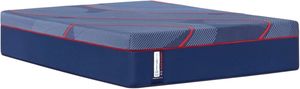
Stomach sleepers and heavier back sleepers should start here. The firm feel holds the hips up rather than letting them settle, which is the exact fix for the arched lower back that a soft surface creates overnight. The tight top puts very little padding between you and the support system, so the structure reads immediately instead of after an inch of sink. At 14 inches, the hybrid build stacks foam over a coil unit, giving you contouring and airflow together for anyone who runs warm. Dedicated side sleepers will find this one too firm at the shoulder.
Top Features
- Elite tier support: Sits at the top of the Posturepedic range, with the most zoning through the reinforced center third.
- Firm tight top feel: Minimal surface padding keeps hips level for stomach sleepers and heavier body types.
- 14-inch hybrid build: Foam comfort layers over a coil unit deliver contouring without trapping heat the way solid foam does.
- Queen size shown: Fits standard queen frames, with deep-pocket sheets recommended at this profile.
Sealy Posturepedic Elite Brenham II Wrapped Coil 15” Medium Tight Top Queen Mattress
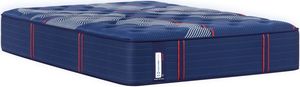
Same Elite collection as the model above, two meaningful changes. The feel moves from firm to medium, and the build moves from hybrid to a wrapped coil spring construction at a taller 15-inch profile. That combination suits back and side sleepers who switch positions through the night, since the medium surface allows shoulder and hip sink while the coils rebound quickly enough to make turning over easy. Wrapped coils keep a restless partner’s movement from crossing the bed. The tight top means less initial cushion, so plush-surface shoppers should look at a euro top instead.
Top Features
- Medium feel: Lands in the shared comfort window that works for back sleepers, side sleepers, and couples who split the difference.
- Wrapped coil spring build: More pushback and faster rebound than a hybrid, which makes repositioning and getting out of bed easier.
- 15-inch profile: A taller bed height that pairs well with a low profile foundation to keep the surface at a comfortable sitting height.
- Individually wrapped coils: Compress where the weight lands so one partner’s movement stays local.
Sealy Posturepedic Plus Paterson II Wrapped Coil 15” Firm Euro Pillow Top Queen Mattress
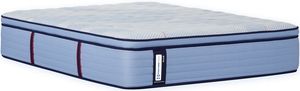
This is the answer for shoppers who need firm support but do not want a bed that feels hard the moment they lie down. The firm coil system underneath keeps hips level for stomach and heavier back sleepers, while the euro pillow top adds a cushioned layer stitched flush to the edges. Flush stitching matters more than it sounds, because the cushioning runs all the way to the perimeter instead of stopping short of it. The Plus tier sets a strong value point at 15 inches. Lighter side sleepers may still want a softer feel.
Top Features
- Posturepedic Plus tier: A step up in coil quality and comfort layer depth over the core collection.
- Firm feel with a cushioned surface: Structural support underneath and a softer first inch on top, without giving up hip alignment.
- Euro pillow top construction: Stitched flush with the edges so usable cushioning extends toward the perimeter.
- Wrapped coil support system: Individually encased coils handle both spinal support and motion isolation.
Sealy Posturepedic Pro DuPont II Wrapped Coil 15” Medium Euro Pillow Top Queen Mattress
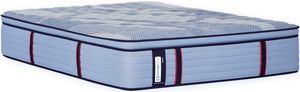
Put the Pro tier next to the Plus model above and the comparison gets clean. Same 15-inch profile, same euro pillow top, same wrapped coil family, but a medium feel instead of firm and a higher tier underneath. Medium plus a cushioned euro top is the most broadly comfortable combination in this showcase, which makes it the natural pick for a primary bedroom shared by a back sleeper and a side sleeper. The Pro tier adds deeper comfort layers and stronger edge reinforcement. Stomach sleepers should step down to a firm feel instead.
Top Features
- Posturepedic Pro tier: Higher coil count and deeper gel memory foam than the Plus collection at the same profile height.
- Medium euro pillow top: Cushioned surface over medium support, the widest-appeal feel for mixed-position couples.
- Reinforced coil edge: A firmer perimeter widens the usable sleep surface on a queen shared by two people.
- 15-inch profile: Enough material for a heavier sleeper to compress through before reaching the support core.
Sealy Special Edition Warner Wrapped Coil 14” Plush Euro Pillow Top Queen Mattress
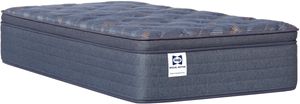
Worth being straight about this one: it is a Sealy Special Edition, not a Posturepedic, so it does not carry the zoned center-third story the rest of this list is built on. What it does offer is the softest surface here. Dedicated side sleepers and lighter sleepers who found every Posturepedic model too firm should try this before giving up on the brand. The plush euro pillow top over a 14-inch wrapped coil build lets the shoulder and hip sink deeply. Heavier sleepers and stomach sleepers should stay with a firmer option.
Top Features
- Plush comfort feel: The softest surface in this lineup, aimed at side sleepers who need real shoulder and hip sink.
- Wrapped coil support: Individually encased coils keep motion local and provide coil pushback beneath the soft top.
- 14-inch euro pillow top build: Cushioning stitched flush to the edges for usable softness across the full surface.
- Sealy Special Edition series: A different series from the Posturepedic family, chosen here specifically for shoppers who want plush.
Try a Sealy Posturepedic in Person and Wake Up Without the Morning Stiffness
The six signs point toward fit rather than toward one best model, and fit comes down to three separate decisions: the collection tier, the build type, and the comfort feel. Get those three in the right order and the shortlist writes itself. Get them backward and you end up with the right brand in the wrong firmness, which is the most expensive mistake in mattress shopping.
Come lie down on them. Visit Texas Appliance to try a Sealy Posturepedic in person with a sleep specialist who will match firmness to your body type and sleep position, or browse the full mattress selection online first. We have served the Dallas-Fort Worth metroplex for decades from multiple showroom locations, with delivery and setup, old mattress removal, and financing options available. When you have a question two years from now, you are calling a local store and talking to someone who can actually help, not waiting on a chat window. Stop by a showroom, give us a call, or start browsing mattresses online tonight.
Frequently Asked Questions about Sealy Posturepedic Mattresses
A Sealy Posturepedic is built around reinforced center-third coils that keep the hips from sinking below the shoulders, which is the alignment issue behind a lot of morning lower-back stiffness. Individual results vary and this is not medical advice, so anyone with ongoing pain should pair the mattress decision with a conversation with their doctor.
Posturepedic Plus sits one tier above the core Posturepedic collection, with a higher coil count, deeper gel memory foam comfort layers, and stronger edge reinforcement. Both use the same zoned center-third support principle, so the upgrade buys durability and surface comfort rather than a different support concept.
Yes, side sleepers do well on the medium and medium-soft feels in this line, particularly euro top and pillow top builds that let the shoulder and hip sink. Firm models in the same collection are aimed at stomach sleepers and heavier body types and will feel too hard at the shoulder for most side sleepers.
A Sealy Posturepedic typically lasts 7 to 10 years with proper care, which matches the 10-year limited warranty carried by most models. Using an approved foundation, adding a mattress protector, and rotating the mattress head to foot on a schedule are what get you to the top of that range.
Choose a hybrid if you want deeper contouring and pressure relief, and choose a spring model if you want more bounce, easier repositioning, and a lower price at the same tier. Both often share the same coil unit within a collection, so the real question is how much foam you want between your body and those coils.
Sealy Posturepedic models are available in firm, medium, and soft or plush feels, with medium and medium-firm being the most common across the line. Top styles including tight top, euro top, pillow top, and smooth top modify that feel further by changing how much cushioning sits above the coil system.
Why Trust Texas Appliance?
With roots back to the 1950s, Texas Appliance is an established, locally owned and operated, residential major appliance retailer serving both residential and builders’ needs. Our 4 locations allow us to offer a full spectrum of appliances to meet your every need. With over 40 major quality brands, Texas Appliance has one of the largest displays of built–in and free–standing appliances in the state of Texas.
We will be the best appliance dealer in our markets by exceeding our customers' expectations in every way. We will treat our customers, vendors and fellow employees with respect, honesty, integrity and appreciation. The difference between a "Good" company and a "Great" company lies in its' employees' determination.
Shop Sealy Mattresses at Texas Appliance
Stop by Texas Appliance’s Fort Worth Store and Outlet locations to see what a difference buying local with an experienced staff can make. Or shop Mattresses online! Our friendly experts are always happy to help you find the best Sealy mattresses for your bedroom — whether you call us at 817-299-2800, use our online chat feature, or visit us in person.