

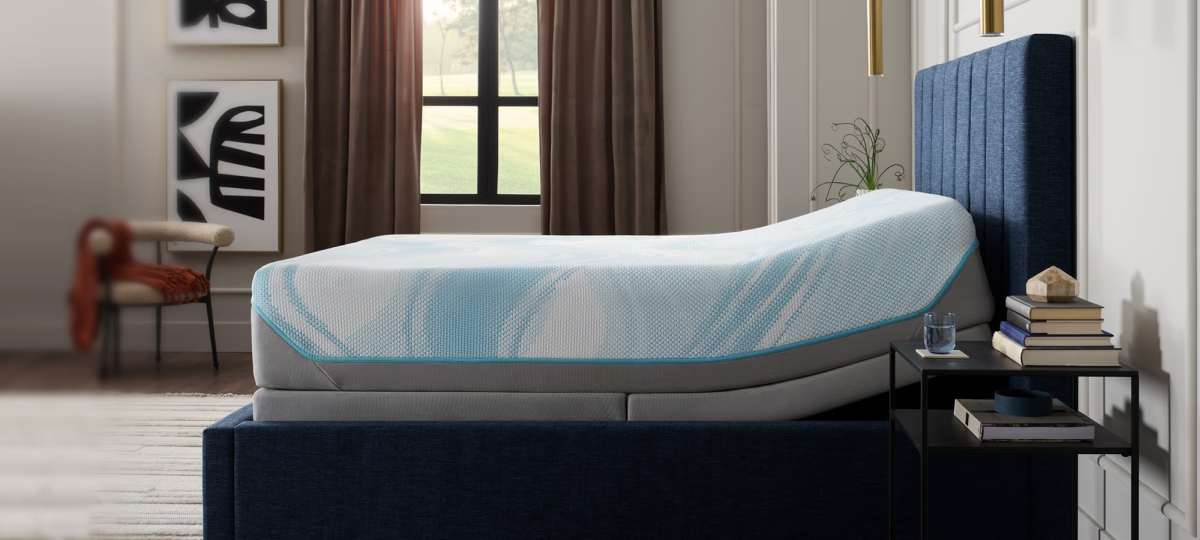
Four pillows go under your shoulders at eleven o’clock and by two in the morning two of them are on the floor, one is folded under your ribs, and your neck has taken the difference. Dinner comes back up the moment your head goes flat, so you are awake and swallowing at three. On the other side of the mattress, your partner starts snoring roughly four minutes after the light goes off, every night, without exception. And your calves and ankles are still tight and swollen from ten hours on a warehouse floor, because a flat bed gives them nowhere to drain. An adjustable bed frame exists because a flat sleeping surface is a compromise for a body that is not flat.
Find the Adjustable Bed Frame That Fits How You Sleep
Our sleep specialists match adjustable bases to mattresses and sleepers every day across our Arlington, Fort Worth, Hurst, and Denton showrooms, where you can try every position before you buy. Shop adjustable bases with delivery, professional installation, and old bed removal handled by our own local team.
What is worth knowing before you shop is that most of those complaints respond to the same simple thing, which is changing the angle of your upper body and your legs a few degrees at a time. At Texas Appliance, our sleep specialists talk through this trade every week with North Texas customers, from couples who cannot agree on a sleeping position to shift workers who need their legs raised after a long day. This article covers how an adjustable bed frame works, the features that actually matter, the genuine health and sleep benefits, the drawbacks nobody brings up on the showroom floor, how it compares to a standard frame, what it costs, and who should skip it entirely.
Key Takeaways
- A base is a motorized deck, not a bed: An adjustable bed frame raises the head and foot sections independently, and it is bought separately from the mattress that sits on top of it.
- Position is the whole benefit: Head angle addresses reflux and snoring, foot angle addresses circulation and swelling, and the zero gravity preset spreads body weight to take pressure off the lower back.
- Mattress compatibility is the number one regret: Memory foam, latex, and most hybrids flex properly, while rigid-border innerspring and traditional pillow-top mattresses often do not and can lose their warranty if forced.
- The trade-offs are cost, weight, and moving parts: You are paying more up front, adding 100 pounds or more of hardware to the room, and accepting motors and electronics that can eventually need service.
How an Adjustable Bed Frame Works

An adjustable bed frame, also called an adjustable base, is a motorized platform that replaces your box spring and metal frame or drops inside an existing bed frame. The deck is split into hinged sections, and quiet motors drive lift mechanisms that raise the head section, the foot section, or both, independently and in small increments.
The parts list is short and worth knowing before a salesperson recites it at you:
- One or two motors, depending on whether the head and foot move together or separately.
- A hinged deck, usually three or four sections, that supports the mattress as it bends.
- A wired remote, wireless remote, or phone app for control, and often all three.
- A standard household power supply, which means the base needs an outlet within reach of the cord.
- A battery backup that drives the bed flat during a power outage, so nobody is stuck sitting upright until the lights come back.
What It Is Not
An adjustable base is not a hospital bed. Hospital beds raise the entire deck vertically, use side rails, and are built for clinical transfers. An adjustable bed frame is furniture, sized to standard mattress dimensions and styled to live in a bedroom.
It is also not a mattress. The base and mattress are two separate purchases, and pairing the wrong two is the most common way this upgrade goes badly. Finally, it is not a platform or box spring, because those exist to be rigid and this exists to bend.
Configurations and Weight Ratings
- Single-motion and full-size bases move as one unit, which suits a solo sleeper in a twin, full, or queen.
- Split king and split California king are two independent bases side by side under two twin XL or split California king mattresses, so each partner sets their own angle.
- Wall hugger designs slide the deck backward as the head raises, so you stay level with your nightstand instead of drifting a foot away from it.
- Heavy-duty models carry higher weight ratings for larger sleepers or heavier mattresses.
Two weight numbers appear on a spec sheet and they measure different things. Total load capacity is what the frame can hold at rest, including the mattress, the bedding, and the people. Motor lifting capacity is what the motors can actually raise from flat, and it is always the smaller number. A base rated for 750 pounds total with a 600-pound lift capacity will hold a heavy hybrid mattress fine but may struggle to lift it with two adults on top, which is exactly the situation that burns out a motor early.
Read more:
Pros & Cons of Pillow Top Mattresses
How to Choose the Right Mattress Foundation for Your Bed
What Happens to Your Existing Frame
This is the part most articles skip. Your box spring is done, because a base replaces it entirely. Your metal frame is usually done too, though many bases include adjustable legs that let them stand alone in the same footprint. Your headboard often survives: most quality bases include headboard brackets that bolt the board directly to the base so it moves with the bed. Your footboard usually does not survive, because the foot section needs room to lift.
Key Features to Look For in an Adjustable Bed Frame

Feature lists in this category are sorted by marketing tier, not by usefulness. Here they are sorted by how often you will actually touch them.
Positioning Features, Which Justify the Purchase
- Zero gravity preset, which raises the head slightly and the knees higher, distributing weight across the whole body.
- Anti-snore preset, a gentle head raise of roughly seven degrees that opens the airway without waking anyone.
- TV and reading positions, steeper head angles with light knee support so you do not slide down the mattress.
- A flat memory button, which sounds trivial and is the button you will press most often.
- Lumbar articulation and pillow tilt on premium models, which fine-tune lower back support and head angle independently.
Comfort Features, Which Range From Great to Forgotten
- Dual-zone massage with intensity settings is genuinely pleasant for tight legs and is the most used comfort feature.
- USB and USB-C charging ports built into the base save a nightstand outlet and get used every night.
- Under-bed lighting earns its keep in a household with anyone making a 3 a.m. trip.
- App and voice assistant control is convenient once the novelty passes, mostly for setting a preset without finding the remote.
- Bluetooth pairing and sleep tracking are the features owners most commonly try for a month and stop using.
Build Features That Decide Long-Term Satisfaction
- Wall hugger engineering, which matters enormously in a small bedroom where the nightstand cannot move.
- Quiet motor design, since a loud motor at 2 a.m. wakes the person you were trying not to wake.
- Adjustable leg heights, so the base can match the height of an existing headboard or clear an under-bed storage need.
- Straightforward assembly, because most bases ship folded and unfold into position rather than requiring a full build.
- Safety lockouts, which disable the remote so a child or a pet cannot run the bed while nobody is watching.
The Noise Question, Answered Directly
Every adjustable bed frame makes sound when it moves. Normal is a low, steady hum for the five to fifteen seconds the deck is in motion, roughly the volume of a bathroom fan two rooms away, and then complete silence. What is not normal is grinding, clicking, a motor that runs on after the deck stops, or a base that moves in jerks instead of smoothly. Those signal a lift mechanism binding or a motor mount working loose, and both are service items rather than things to live with.
Health and Sleep Benefits of an Adjustable Bed Frame
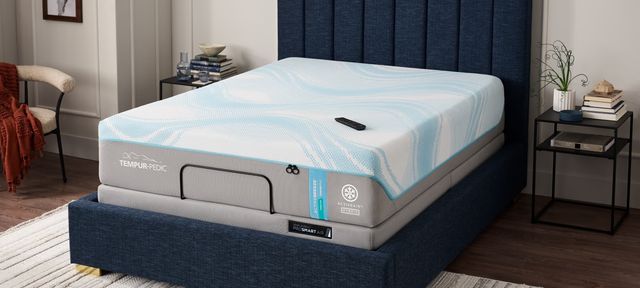
Each benefit below comes from a specific position doing a specific physical job, which is why the position matters more than the brand.
Raising the Head
- Acid reflux and GERD: holding the torso above the stomach at roughly six to eight inches of head rise uses gravity to keep stomach acid where it belongs, which is why so many reflux sufferers end up here after failing with wedge pillows.
- Snoring: a slight head rise opens a partially collapsed airway, which reduces the vibration that produces snoring in the first place.
- Mild sleep apnea symptoms: many people find that sleeping at an incline reduces the frequency of events, though this supports comfort rather than replacing prescribed treatment.
- Congestion and COPD comfort: an upright chest makes breathing easier during allergy season, which in North Texas means most of the year.
Raising the Feet
- Circulation: lifting the legs above the heart helps blood return from the lower body instead of pooling in the calves and ankles.
- Swelling: anyone on their feet all day, and anyone in late pregnancy, generally notices reduced ankle and foot swelling within a few nights.
- Recovery: post-workout legs and post-surgical recovery both benefit from consistent, hands-free leg raising that a stack of pillows cannot hold all night.
The Zero Gravity Position
Zero gravity borrows its geometry from aerospace seating. The head comes up slightly, the knees come up more, and the body settles into a gentle V that distributes weight across the largest possible surface area. The result is less compression at the lumbar spine and less pressure on the hips and tailbone, which is why chronic lower back sleepers gravitate to this preset and rarely leave it.
Mobility and Independence
For older adults, getting out of a flat bed means rolling, pushing, and swinging the legs down in one motion that a bad hip or a weak shoulder makes genuinely hard. Raising the head to near-sitting turns that into standing up from a chair. That difference is the reason many families buy an adjustable bed frame for a parent long before comfort ever enters the conversation.
One honest note. An adjustable bed frame supports comfort and helps manage symptoms, and it is not a medical treatment or a substitute for one. If you have been diagnosed with sleep apnea, GERD, a circulatory condition, or a spinal problem, talk to your physician about whether positional sleeping fits your treatment plan and what angle they recommend.
Adjustable Bed Frame vs Standard Bed Frame Compared
| Factor | Adjustable Bed Frame | Standard Platform Bed | Box Spring and Metal Frame |
|---|---|---|---|
| Positioning | Head and foot articulate independently | Fixed flat, no articulation | Fixed flat, no articulation |
| Pressure relief | Zero gravity spreads weight across the body | Depends entirely on the mattress | Depends entirely on the mattress |
| Snoring and reflux support | Direct, through head angle | None beyond pillow stacking | None beyond pillow stacking |
| Mattress compatibility | Foam, latex, and flexible hybrids only | Nearly any mattress | Nearly any mattress |
| Headboard compatibility | Bolt-on brackets, no footboard | Usually integrated | Bracket mount, footboard fine |
| Weight and moving | Heavy, awkward, often a two-person job | Moderate, disassembles easily | Light, easiest to move |
| Power and maintenance | Needs an outlet, motors can need service | None | None |
| Expected lifespan | Roughly 10 to 20 years, motors first to fail | 15 years or more | 10 years or more |
| Price tier | Mid to premium | Entry to mid | Entry |
Read this table by weighing what your body needs at night against what you are willing to maintain and move, since every advantage in the first column is paid for in the last four rows.
Within the adjustable column itself the tiers separate cleanly. Entry bases give you a single motor, head and foot movement, a wired or basic wireless remote, and a shorter warranty. Mid-tier bases add a second motor, preset positions, massage, USB ports, and wall hugger engineering. Premium bases add lumbar articulation, pillow tilt, app and voice control, under-bed lighting, sleep tracking, quieter motors, and the longest warranty terms in the category.
Mattress Compatibility and Setup Requirements
This is where buyer regret lives, so it deserves more attention than the feature list.
Which Mattresses Flex and Which Fight Back
Memory foam and latex mattresses are the natural pairing, because a continuous foam core bends smoothly along its whole length. Most modern hybrids work well too, since pocketed coils move independently and the perimeter is usually foam-encased rather than rigid. Traditional innerspring mattresses with a connected coil unit and a stiff border rod are the problem, along with heavy pillow-tops built on a rigid frame. Forcing one of those to bend can break the border and, in many cases, voids the mattress warranty outright.
A few practical numbers. Most bases handle mattresses between roughly 8 and 14 inches thick, with thicker mattresses bending less at the same motor angle. Retainer bars at the foot keep the mattress from creeping down the deck as it articulates, and they are not optional on a base that gets used nightly.
Room and Frame Requirements
- A grounded outlet within reach of the power cord, ideally behind the head of the bed rather than across the room.
- Clearance behind the headboard for the deck to travel, unless the base is a wall hugger design.
- A nightstand at a height that still works when the head is raised, which is the entire argument for wall hugger engineering.
- Cord routing that keeps the power cable and remote wire clear of the moving deck, since a pinched cord is the most common self-inflicted failure.
- A clear delivery path, because these bases arrive heavy and folded and are not carried up a tight staircase by one person.
Bedding on an Articulated Base
Standard fitted sheets pull loose at the corners when the head goes up, especially on split configurations where two mattresses shift against each other. Deep-pocket fitted sheets with strong elastic solve most of it, and split king sets sold specifically for adjustable bases solve the rest. Mattress protectors work normally as long as they are not the stiff, quilted kind with a rigid skirt.
Run This Checklist Before You Order
- Is your current mattress foam, latex, or a hybrid with a foam-encased perimeter?
- Does the mattress manufacturer explicitly allow use on an adjustable base?
- Is your mattress between roughly 8 and 14 inches thick?
- Is there an outlet within six feet of the head of the bed?
- Do you want a headboard to stay, and does the base you are considering include brackets for it?
- If you are buying split king, are you prepared to buy two mattresses rather than one?
Adjustable Bed Frame Pros and Cons
An adjustable bed frame buys you control over the one variable a mattress cannot change, which is the shape your body holds for eight hours. The comfort and symptom relief are real and most owners notice them in the first week. The trade-offs are equally real, and they show up in the price, in the mattress you may have to replace, and in the fact that you have added machinery to a piece of furniture that used to have none. If you are deciding whether to upgrade from a standard frame, weigh both sides honestly.
Pros
Positioning you control:
Head and foot sections move independently and in small increments, so you can find a comfortable angle instead of settling for flat.
Real reflux and snoring relief:
A modest head rise uses gravity against stomach acid and opens a partially collapsed airway, which pillows cannot hold all night.
Better circulation and less swelling:
Raising the legs above heart level helps fluid return from the calves and ankles after a long day standing.
Pressure relief through zero gravity:
Distributing body weight across a wider surface reduces compression at the lower back and hips.
Comfortable reading and TV time:
A proper backrest angle beats a pillow tower that collapses twenty minutes in.
Independent settings for couples:
Split king and split California king configurations let one partner sit up and the other stay flat without either compromising.
Easier in and out of bed:
Raising the head to near-sitting turns getting up into standing from a chair, which matters more with every passing year.
Cons
Higher upfront cost:
An adjustable base costs considerably more than a platform frame or a box spring, and split configurations effectively double the base purchase.
Mattress compatibility limits:
A rigid innerspring or stiff pillow-top will not flex properly and may need replacing, which turns one purchase into two.
Weight, noise, and eventual service:
These bases are heavy and awkward to move, the motors hum when they run, and motors and control boards are the components most likely to need repair over a decade of nightly use.
What an Adjustable Bed Frame Costs and How Long It Lasts
Prices shift with promotions, so think in tiers rather than fixed figures. Entry-level bases give you a single motor, head and foot movement, a basic remote, and a shorter warranty. Mid-tier bases add a second motor, preset positions, massage, USB charging, and wall hugger travel. Premium bases add lumbar articulation, pillow tilt, app and voice control, under-bed lighting, the quietest motors, and the longest coverage in the category.
The Costs Buyers Forget
- A compatible mattress, if the one you own has a rigid border and will not flex.
- Two mattresses instead of one on any split king or split California king configuration.
- Delivery, setup, and haul-away of the old bed, box spring, and frame.
- Deep-pocket fitted sheets or split-size bedding, since standard sheets pull off the corners on an articulated deck.
- A headboard bracket kit, if the base does not include one for the board you already own.
Warranty, Lifespan, and Simple Maintenance
Warranties in this category are layered rather than single-term. The frame itself usually carries the longest coverage, the motors a shorter term, and the electronics and remote the shortest of all. Read whether labor is included, because a covered part with uncovered labor still means paying for the service call.
A well-built base should give you ten to twenty years, and the motors and control board are almost always the first things to need attention rather than the frame. Here is the habit our delivery crews teach every customer at setup: once a year, run the bed to its full head-up position and check that the power cord and remote wire still hang free of the hinge points rather than draping across them, then run a socket wrench around the leg bolts and deck bolts and snug anything that has walked loose. A pinched cord and loose deck hardware cause more adjustable base service calls than motor failure does, and both take about ten minutes to prevent.
A Fair Way to Compare Two Bases
Divide the price by the nights you expect to use it. A base you keep for twelve years is roughly 4,380 nights, so a difference of a few hundred dollars between two models works out to pennies per night. Run that math on both bases you are considering, then ask whether the more expensive one delivers something you will use every single one of those nights, such as wall hugger travel or a second motor, or something you will use twice a year. Financing is widely available in this category, which makes the per-night framing more useful than the sticker comparison.
Who Should Buy an Adjustable Bed Frame and Who Should Skip It
Sleeper profiles decide this purchase far better than feature lists do.
Who Benefits Most
- The reflux or snoring sufferer, who gets the most immediate and obvious result from a modest head raise.
- The chronic back or joint pain sleeper, who usually finds the zero gravity preset and stops experimenting.
- The couple with mismatched preferences, for whom a split king configuration ends a nightly disagreement.
- The older adult prioritizing mobility, who gains independent, unassisted entry and exit from bed.
- The nightly reader or TV watcher, who is currently building a pillow tower that collapses by the second chapter.
- The recovering athlete or post-surgical sleeper, who needs legs raised consistently for weeks rather than for an hour.
Who Should Skip It
- Anyone with a rigid innerspring or stiff pillow-top mattress and no budget to replace it, since forcing it to bend risks the mattress and the warranty on it.
- Anyone in a very small bedroom with no outlet within reach of the head of the bed and no easy way to add one.
- Renters who move every year or two, because these bases are heavy, awkward, and genuinely unpleasant to relocate.
- Anyone who sleeps strictly on their stomach, since raising the head puts the lower back into a position most stomach sleepers dislike.
Questions to Ask Before You Order
- What is the total load capacity, and what is the separate motor lifting capacity?
- How is the warranty split between frame, motors, and electronics, and is labor covered?
- Does delivery include setup, and does it include removal of the old bed and box spring?
- Has your specific mattress been confirmed compatible with this base?
- Is there a trial period, and what does returning a base actually involve?
- Who handles service locally if a motor fails in year six?
What a North Texas Bedroom Does to This Decision
Bedroom advice written for a national audience assumes a generic room, and the housing stock across Tarrant and Denton counties is anything but generic. The two-story production homes that filled south Arlington, north Fort Worth, and the Denton corridor put the primary bedroom upstairs at the top of a turn in the staircase, and they finished those rooms with a single outlet per wall and windows that run low. Meanwhile the older ranch homes around Hurst and central Arlington have narrower doorways and smaller primary bedrooms than anything built after 2005. Both types create the same handful of problems.
- Upstairs primary bedrooms with a turned staircase are the reason split king configurations are often the easier delivery, since two twin XL bases navigate a turn that one king base cannot.
- Low window sills in newer builds mean a raised head section can sit in front of the glass, so check the sill height before choosing a tall leg setting.
- One outlet per wall in production homes frequently puts the nearest power behind a nightstand, which decides which side of the bed the base’s cord has to run.
- Long allergy seasons across North Texas, running from spring oak and cedar elm through fall ragweed, make the anti-snore and raised head positions useful for far more of the year here than in most of the country.
- Summer heat pushes conditioned air toward the ceiling in two-story homes, and sleeping at an incline in an upstairs bedroom puts your head in warmer air, which is worth knowing before you blame the mattress.
- Smaller primary bedrooms in older Hurst and Arlington ranch homes make wall hugger engineering close to mandatory, because the nightstand has nowhere else to go.
The bases below run from a straightforward power base through the smart and pro tiers, in sizes from full up to split California king. Every one of them is designed to pair with a flexible mattress, and the meaningful differences between them are motor configuration, preset positions, and how much fine-tuning the controls give you. Our sleep specialists can run any of these through their full range on the showroom floor so you can feel the difference before deciding.
Tempur-Pedic TEMPUR-Ergo Power Base, Queen
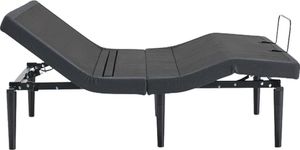
Anyone who wants the core benefit of an adjustable bed frame without paying for connected features should start here. This queen power base delivers the positioning that actually changes how you sleep, meaning independent head and foot articulation for reflux relief, snoring reduction, and raised legs after a long day. Tempur-Pedic builds the Ergo line specifically to pair with its own mattresses, so the flex profile is matched rather than approximated. Best suited to a solo sleeper or a couple who agree on position and want a dependable base rather than a bedroom full of apps.
Top Features
- Independent head and foot articulation: The two adjustments that produce nearly all of the health and comfort benefit in this category.
- Queen sizing: The most common bedroom size in North Texas, and a single-piece base rather than a split.
- Tempur-Pedic engineering: A base designed around the flex characteristics of Tempur-Pedic mattresses.
- Straightforward operation: Positioning without a setup process, which suits anyone who wants the bed to just work.
Tempur-Pedic TEMPUR-Ergo Smart Base, Full
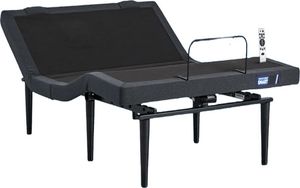
Stepping up to the Smart Base adds the layer that turns a good base into one you interact with nightly. Beyond the head and foot positioning, the Smart tier brings Tempur-Pedic’s connected controls into the picture, which is where preset positions and app-driven adjustment live. The full size makes it a strong fit for a single sleeper in a guest room, a smaller primary bedroom, or an older home where a queen simply will not clear the doorway. A good match for a solo sleeper who wants the premium feature set without the footprint of a king.
Top Features
- Smart base controls: Connected adjustment and preset positioning beyond a basic up-and-down remote.
- Full size footprint: Fits smaller primary bedrooms and guest rooms where a queen crowds the walkways.
- Head and foot positioning: The reflux, snoring, and circulation benefits covered throughout this guide.
- Tempur-Pedic mattress pairing: Built to flex in step with the mattress it is designed to carry.
Sealy Ease 4.0 Power Base, Full
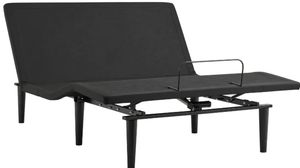
Value shoppers should look hard at this one before stretching the budget. The Sealy Ease 4.0 is the accessible entry point into an adjustable bed frame, and it covers the positioning that produces the benefits people actually buy this category for. Sealy has been building foundations for a very long time, and the Ease line is its answer for households that want head and foot adjustment without a premium badge. In a full size, it is the practical choice for a guest room, a teenager with growing pains, or a first adjustable base you are not yet sure you will love.
Top Features
- Accessible entry price: The most affordable path in this lineup into a motorized base.
- Head and foot adjustment: Covers reflux relief, snore reduction, and leg raising without upsell features.
- Sealy foundation heritage: A long-established name in bed foundations rather than a newcomer to the category.
- Full size convenience: Right-sized for guest rooms, smaller bedrooms, and single sleepers.
Tempur-Pedic TEMPUR-Ergo Smart Base, Split California King
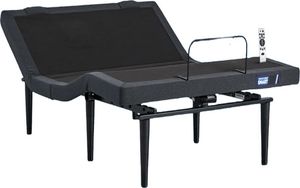
Couples who cannot agree on a sleeping position should stop here. This split California king ships as two independent pieces, which means one partner can sit up reading at a steep angle while the other stays perfectly flat, with neither one feeling the other move. The California king footprint suits taller sleepers who need the extra length more than the extra width. It also solves the practical delivery problem in two-story North Texas homes, since two narrower bases handle a turned staircase far more easily than one oversized frame.
Top Features
- Two independent pieces: Each side positions separately, which ends the nightly negotiation over head angle.
- Split California king sizing: Extra length for taller sleepers, in a configuration built for two.
- Smart base controls: Preset positions and connected adjustment on both halves.
- Easier upstairs delivery: Two narrower bases navigate stairwells that a single king-width base cannot.
Tempur-Pedic TEMPUR-Ergo ProSmart Base, Split California King
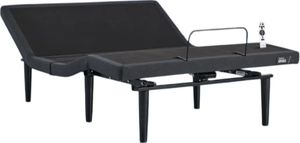
At the top of this lineup sits the ProSmart, which is the base for a household that wants everything the category offers. It carries the split California king configuration for independent positioning on each side, on the ProSmart tier that represents Tempur-Pedic’s most advanced adjustable base engineering. For a couple where one partner has reflux, the other snores, and both want their own presets waiting at bedtime, this is the configuration that addresses all of it at once. Best suited to a primary bedroom where sleep quality is the priority and the budget follows it.
Top Features
- ProSmart top tier: Tempur-Pedic’s most advanced adjustable base platform in this group.
- Split California king, two pieces: Fully independent positioning for each sleeper, with extra length for tall frames.
- Advanced smart controls: The deepest set of connected features and presets among these bases.
- Built for demanding sleepers: The right answer when reflux, snoring, and back pain all share one bedroom.
Is an Adjustable Bed Frame Worth It for Your Bedroom
An adjustable bed frame earns its keep by putting your body at the angle it needs, which is why reflux, snoring, back pressure, and swollen legs all improve at the same time for so many owners. The honest costs are a higher price, a mattress that may need replacing if it does not flex, and motors that will eventually be the part that needs service. Matching the base to the sleeper matters more than picking the brand with the longest feature list.
Come lie on one. Positions feel completely different from how they look, and five minutes on the showroom floor tells you more than a week of reading reviews. Visit a Texas Appliance showroom in Arlington, Fort Worth, Hurst, or Denton, or contact our team for a personalized recommendation. Our sleep specialists confirm mattress compatibility and weight capacity before anything is ordered, our own crews handle delivery, professional installation, and removal of your old bed, and our service department is right here in North Texas if a motor ever needs attention. Online-only sellers and big-box floors cannot let you test a base before buying, and they leave the setup on your living room floor in a box.
Read more:
Types of Mattresses Compared: Euro Top vs. Pillow Top vs. Tight Top
King Size Mattress Buying Guide [+4 Top Picks]
Frequently Asked Questions about Adjustable Bed Frames
The main disadvantages of an adjustable bed frame are the higher upfront cost, the mattress compatibility limits that may force you to replace a rigid innerspring, and the added weight, motor noise, and eventual service needs of a bed with moving parts. Split configurations also require two mattresses and specialty bedding, which are costs buyers routinely forget until delivery day.
No, only mattresses that flex will work properly on an adjustable bed frame, which means memory foam, latex, and most modern hybrids with pocketed coils and a foam-encased perimeter. Traditional innerspring mattresses with a connected coil unit and a rigid border rod resist bending and, in many cases, lose their warranty coverage if used on an articulating base.
Raising the head on an adjustable bed frame reduces snoring for many people by opening a partially collapsed airway, and some sleepers with mild sleep apnea report fewer symptoms at a modest incline. This is comfort and symptom support rather than treatment, so anyone with diagnosed sleep apnea should keep using prescribed therapy and ask their physician what angle fits their plan.
Yes, most quality adjustable bed frames include headboard brackets that bolt an existing headboard directly to the base so it stays aligned as the deck moves. Footboards are the exception, since the foot section needs clearance to lift, and wall hugger designs are worth choosing when the headboard is fixed to the wall rather than to the bed.
Adjustable bed frame pricing spans a wide range, with entry-level single-motor bases costing a fraction of premium models that add lumbar articulation, massage, app control, and long warranty terms. Remember to budget for a compatible mattress if your current one will not flex, two mattresses on a split configuration, delivery and setup, old bed removal, and deep-pocket bedding.
A well-built adjustable bed frame typically lasts ten to twenty years, with the motors and control electronics being the components most likely to need service before the frame itself wears out. Keeping the power cord clear of the moving deck, staying inside the rated weight capacity, and checking the hardware for tightness once a year are the habits that push a base toward the long end of that range.
Why Trust Texas Appliance?
With roots back to the 1950s, Texas Appliance is an established, locally owned and operated, residential major appliance retailer serving both residential and builders’ needs. Our 4 locations allow us to offer a full spectrum of appliances to meet your every need. With over 40 major quality brands, Texas Appliance has one of the largest displays of built–in and free–standing appliances in the state of Texas.
We will be the best appliance dealer in our markets by exceeding our customers' expectations in every way. We will treat our customers, vendors and fellow employees with respect, honesty, integrity and appreciation. The difference between a "Good" company and a "Great" company lies in its' employees' determination.
Shop Adjustable Bed Frames at Texas Appliance
Stop by Texas Appliance’s Fort Worth Store and Outlet locations to see what a difference buying local with an experienced staff can make. Or shop Mattresses online! Our friendly experts are always happy to help you find the best Sealy mattresses for your bedroom — whether you call us at 817-299-2800, use our online chat feature, or visit us in person.