

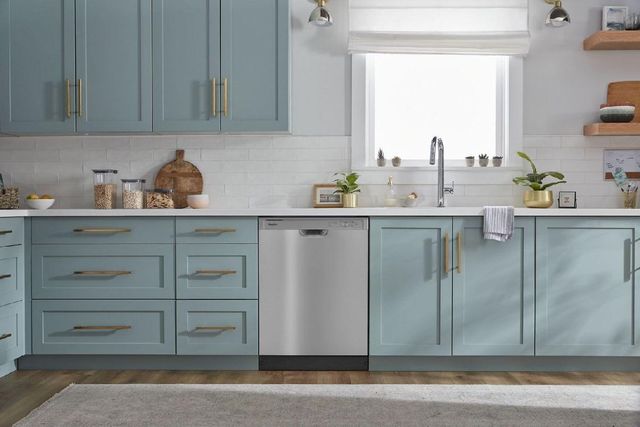
The old dishwasher slides out of a 1979 Richardson ranch kitchen without a fight, and the new one stops cold with three inches still sticking out past the cabinet face. Porcelain tile went down over the original vinyl two springs ago, and that quarter inch of tile plus thinset raised the floor just enough that the top of the new door now catches the plywood substrate under the granite. Across the metroplex in a Keller kitchen, a shopper is looking at a painted filler strip covering four inches of dead cabinet space, left behind when a previous owner dropped an 18-inch unit into a full-width opening. Both problems trace back to the same mistake, which is treating dishwasher size as one number instead of three measurements that all have to clear at once.
Get the Dishwasher Size Right the First Time
Our team fits dishwashers into real Dallas–Fort Worth kitchens every week, from 1970s cabinet openings to brand-new builder cutouts. Compare standard 24-inch built-ins, compact models, and drawer units in one place, with professional installation and local service after the sale.
Here is the part those two homeowners had not figured out yet: every one of those problems is solvable, and none of them requires a remodel. At Texas Appliance, our team helps DFW shoppers turn a cabinet opening into a short list of models that will actually slide in and level out. This guide covers what dishwasher size really means, the standard dimensions almost every kitchen is built around, how to measure your opening in four steps, the compact and ADA-height and drawer alternatives, how place-setting capacity works, and how to match all of it to the way your household cooks.
Key Takeaways
- Size means two different things: Exterior dimensions decide whether the unit fits your cabinet opening, while interior capacity in place settings decides how much it holds, and two 24-inch models can differ by several place settings.
- The standard is 24 by 24 by 34 inches: A standard dishwasher size runs about 24 inches wide, 24 inches deep, and 34 to 35 inches tall, which matches American base cabinets and a 36-inch finished countertop.
- Measure the opening, not the old machine: Take width, height, and depth at the tightest point, measure from the finished floor, and let the smallest number govern the decision.
- Non-standard sizes solve specific problems: Compact 18-inch, ADA-height 32-inch, and drawer models exist for kitchens where a standard unit will not physically go or where loading height matters more than raw capacity.
What Dishwasher Size Really Means: Dimensions Versus Capacity
Dishwasher size describes two separate things that get blurred together constantly. The first is the exterior footprint, meaning the width, height, and depth that have to fit inside your cabinet opening. The second is interior capacity, measured in place settings, which tells you how much the machine holds once it is installed.
Mixing those up leads to real money wasted. Two dishwashers can share an identical 24-inch width and still differ by four or five place settings, because tub shape, rack geometry, and whether the model carries a third rack change usable space far more than the outside dimensions suggest. A tall tub with fold-down tines swallows more dinner plates than a shallower tub of the same width.
Three exterior numbers run through this whole article: width, height, and depth. Width is the one shoppers quote out loud, which is why people say 24-inch dishwasher and mean the entire category. Height and depth are the two that quietly kill installations.
Here is the distinction most guides skip entirely. Manufacturers publish product dimensions, not opening dimensions. A built-in unit is intentionally built roughly a third to a half inch smaller than the cabinet cutout it is designed for, so it can slide in, get shimmed, and level out without scraping the cabinet stiles. That built-in slack is deliberate, and it is also why a 24-inch dishwasher will not save you in a 23 and three-quarter inch opening.
The size families you will meet later in this article are standard, compact, ADA-height, drawer, oversized, and portable or freestanding. Each one exists because a real kitchen problem created demand for it.
Read more:
- Dishwasher Sizes Explained: Standard vs. Compact vs. Drawer Models
- Is There a Standard Dishwasher Width?
Standard Dishwasher Size: The 24-Inch Built-In Explained
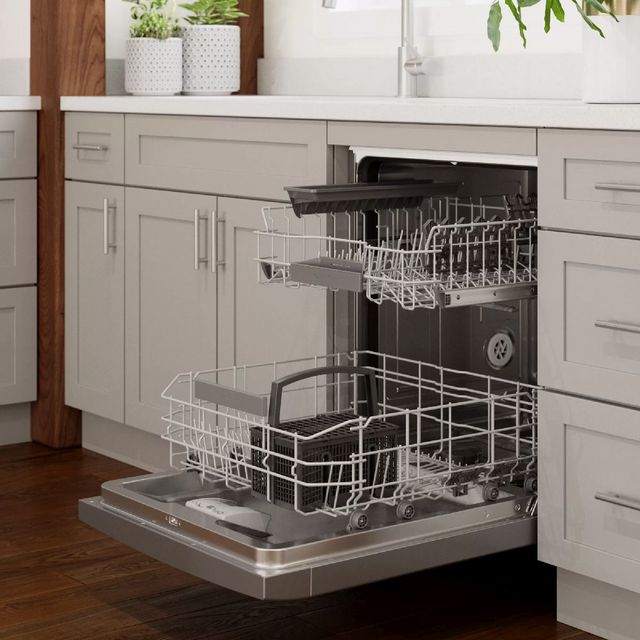
The standard dishwasher size is approximately 24 inches wide, 24 inches deep, and 34 to 35 inches tall. That is the direct answer, and it covers the large majority of dishwashers sold in the United States.
That number is not arbitrary. American base cabinets are built 24 inches deep, and a finished countertop sits at 36 inches off the floor. Subtract the countertop thickness and its substrate and you are left with an opening roughly 34 and one-half to 35 inches tall. Cabinet shops, builders, and appliance engineers all agreed on those dishwasher cutout dimensions decades ago, and every new build in Frisco, Mansfield, and Fort Worth still follows them.
Capacity and Height Flexibility in This Class
Interior capacity for standard built-ins commonly lands between 10 and 16 place settings. The spread depends almost entirely on rack configuration, and models with a third rack sit at the upper end of that range because the shallow top tray absorbs flatware, spatulas, and small lids that would otherwise take up basket space below.
Height is more flexible than the spec sheet implies, thanks to adjustable leveling legs. Most standard units can be raised or lowered roughly an inch, which lets an installer meet an uneven floor, close a gap under the countertop, or clear a toe kick that sits higher than average. That inch of adjustment has rescued more DFW installs than any other feature on the machine.
The practical takeaway is straightforward. If your kitchen was built to modern spec and you have a 24-inch opening, the standard dishwasher size is your default answer, and the widest selection of brands, finishes, and features lives in that class. One caveat worth knowing up front: panel-ready and fully integrated models in this same class can sit slightly deeper than their stainless siblings, because a custom cabinet panel adds real thickness to the door.
How to Measure Your Dishwasher Opening in Four Steps

Grab a metal tape measure, not a cloth one, and write the numbers down as you go.
- 1. Width: Measure cabinet face to cabinet face at the narrowest point. Check at the front of the opening, at the middle, and at the rear, because older cabinets are rarely square and the back is often tighter than the front.
- 2. Height: Measure from the finished floor to the lowest point under the countertop. Include any support rail, apron, or plywood substrate under the stone, and record the smallest number you find.
- 3. Depth: Measure from the back wall to the front edge of the cabinet face. Then check separately whether a countertop overhang, a thick backsplash, or a raised tile edge steals usable depth at the top of the opening.
- 4. Clearances: Confirm the door has room to swing fully open. Plan on roughly 27 inches of free floor space in front of the unit, plus a couple of inches of side clearance so an open door does not strike an adjacent cabinet, an oven handle, or an island overhang.
The Measuring Detail Almost Everyone Misses
Measure the finished floor, not the subfloor. This is the single most common source of the catching problem described at the top of this article, and it shows up constantly in older Dallas and Fort Worth homes where new tile or luxury vinyl plank went down over the original flooring without the cabinets being adjusted.
New flooring raises the effective floor by a quarter inch to three-quarters of an inch, and that shrinks the opening height by the same amount. Worse, a unit that gets forced into a shortened opening can end up partially trapped, meaning it cannot be pulled out for service later without removing flooring or lifting countertop. That turns a routine repair into a project.
Write down all three numbers, note whether the floor is finished or still bare, and bring that slip of paper to a Texas Appliance showroom. Our team will check it against real spec sheets before anything gets ordered. The rule that governs every one of these decisions is simple: the smallest measurement wins.
Dishwasher Size Comparison: Standard, Compact, ADA, Drawer, and Portable
Find your opening width first, then read across to capacity and best use.
| Dishwasher Type | Typical Width | Typical Height | Typical Depth | Place Settings | Best For |
|---|---|---|---|---|---|
| Standard Built-In | 24 inches | 34 to 35 inches | 24 inches | 10 to 16 | Modern kitchens with a standard cutout |
| Compact Built-In | 17.6 to 18 inches | 32 to 34 inches | 22 to 24 inches | 6 to 8 | Condos, casitas, wet bars, butler pantries |
| ADA-Height Built-In | 24 inches | About 32 inches | 24 inches | 10 to 14 | Lowered counters and short openings |
| Single Drawer | 23 to 24 inches | 16 to 19 inches | 22 to 24 inches | 6 to 7 | Small households, islands, prep zones |
| Double Drawer | 23 to 24 inches | 32 to 35 inches | 22 to 24 inches | 12 to 14 combined | Independent loads and waist-high loading |
| Oversized Built-In | 30 to 42 inches | 34 to 35 inches | 24 to 26 inches | 14 or more | Custom builds with purpose-made openings |
| Portable or Freestanding | 18 to 24 inches | 36 to 37 inches | 25 to 27 inches | 6 to 12 | Rentals and kitchens with no cutout |
Three things worth pulling out of that grid:
- Width buys capacity, but rack design buys usable capacity. The jump from 18 inches to 24 inches roughly doubles place settings, while the jump from a two-rack 24-inch model to a three-rack 24-inch model can add several place settings without changing a single exterior dimension.
- Drawer configurations trade total volume for flexibility. Two drawers holding six or seven place settings each let you run a small load tonight and a full load Sunday, which is efficiency a single large tub cannot match.
- Height varies more than width across categories. Nearly everything built-in is 24 inches wide or 18 inches wide, but heights swing from 16 inches for a single drawer to 37 inches for a portable, so the vertical number deserves more attention than it usually gets.
Beyond Standard: Compact, ADA-Height, Drawer, and Oversized Dishwasher Sizes
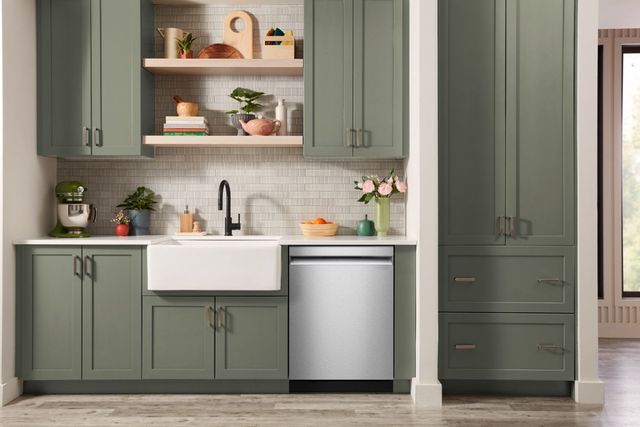
Not every kitchen was built to the spec sheet. Homes across the metroplex built before the 1980s frequently have openings that miss modern dimensions by an inch or more, and second spaces like casitas and pool houses were never designed around a full-size machine at all. These are the categories that solve those situations.
Compact and Apartment-Size Dishwashers
Compact dishwasher dimensions run about 17 and five-eighths to 18 inches wide, 32 to 34 inches tall, and slightly shallower than standard. Capacity typically lands between 6 and 8 place settings, which genuinely serves one or two people.
These belong in condos, garage apartments, casitas, wet bars, and butler pantries. Do not read compact as stripped down, either. An 18-inch dishwasher can carry a stainless tub, a full cycle list, quiet operation, and a delay start, and the shrink happens in the cabinet rather than in the feature set.
ADA-Height Models
An ADA compliant dishwasher height is roughly 32 inches rather than 34, and the units are engineered for lowered counters with one-hand front or top controls that do not require a tight grip.
The second use case is the one nobody advertises. That extra two inches of headroom is the cleanest fix for an existing kitchen where the opening came up short, whether because of new flooring, a thicker slab of granite, or a support rail that sits low. Choosing an ADA-height model can also let a builder run a taller toe kick without touching the countertop.
Drawer Dishwashers
Drawer dishwasher dimensions keep the standard 24-inch width but split the tub. A single drawer runs about 16 to 19 inches tall and holds roughly 6 to 7 place settings. A double drawer stacks two of them into a standard-height opening.
The appeal is real for one and two person households. Loading happens at waist height instead of a full bend, each drawer runs its own cycle, and a genuine half-load costs you half the water. Singles also work beautifully in an island or a bar as a second dishwasher near the prep zone.
Oversized and Portable Options
Oversized dishwasher sizes span 30 to 42 inches wide and show up almost exclusively in custom and luxury builds. They need a purpose-built cabinet opening, so they are not a retrofit option in an existing kitchen.
At the other end sit portable, countertop, and in-sink units, ranging from 18 to 24 inches wide and standing about 36 to 37 inches tall on casters. They are the answer when there is no cabinet cutout at all, which describes plenty of rentals and older homes. The trade-off is honest: you hook a hose to the faucet each time, and the machine is visible in the room rather than hidden in the cabinet run.
Dishwasher Capacity: How Many Place Settings Does Your Household Need
A place setting is a defined unit, not a marketing word. One place setting equals a dinner plate, a bread plate, a saucer, a bowl, a cup, a drinking glass, a dinner fork, a salad fork, a knife, and two teaspoons. Every capacity claim on a spec sheet is measured against that exact list.
Household guidance is easier once you know what the number means:
- One or two people: roughly 6 to 9 place settings covers daily use comfortably.
- A family of three or four: 9 to 12 place settings keeps you to one run per day.
- Larger households and regular entertainers: 12 or more, and this is where third-rack models pay off.
Capacity is not purely a function of width. Rack engineering changes real-world usable space more than an inch of exterior width ever does, which is why hands-on comparison beats spec sheets for this one variable.
Interior Features That Add Capacity Without Adding Size
- Third rack: a shallow top tray for flatware, small utensils, and lids that clears space in the lower basket.
- Adjustable and fold-down tines: rows that flatten so mixing bowls, platters, and pot lids lie down flat.
- Height-adjustable upper rack: raises or lowers a couple of inches to trade glass height for pot clearance below.
- Stemware holders and cutlery trays: dedicated spots that stop wine glasses and knives from stealing plate slots.
If your household washes bulky cookware, tall stockpots, sheet pans, or baby bottles, prioritize adjustable rack height and interior clearance over raw place-setting counts. A 16-place-setting machine that cannot fit your stockpot upright is not a 16-place-setting machine for your kitchen.
There is an efficiency argument for right-sizing too. A properly loaded machine uses less water and energy per dish than a half-empty oversized one, and ENERGY STAR certification gives you a verifiable benchmark for comparing models rather than trusting the brochure.
Choosing a Non-Standard Dishwasher Size: Pros and Cons
A standard 24-inch built-in gives you the deepest model selection, the most finishes, and the lowest installation cost, and for most kitchens it is simply the right call. Compact, ADA-height, and drawer sizes exist because they solve fit and accessibility problems a standard unit cannot solve at any price. Weigh both sides against your actual opening.
Pros
Fits where a standard unit physically cannot
An 18-inch or ADA-height model turns a too-narrow or too-short opening into a working dishwasher without cabinet surgery.
Better ergonomics and accessibility
Drawer models load at waist height and ADA units sit under lowered counters, which matters for accessible and aging-in-place kitchens.
Real small-load efficiency
A single drawer or a compact tub runs a genuinely small load without wasting a full cycle of water and heat.
Frees cabinet space in tight layouts
Choosing an 18-inch unit in a small kitchen leaves room for a six-inch pull-out or a base cabinet you would otherwise lose.
Cons
Fewer place settings means more cycles
A 6 to 8 place setting compact will run more often than a 14 place setting standard tub in the same household.
Narrower selection at a higher cost per place setting
Fewer models, fewer finishes, and fewer feature tiers, and drawer units in particular carry a premium.
Read more:
- Built-In Dishwasher Buying Guide: Size, Features, & Installation
- A Buyer's Guide to 24 Inch Dishwashers and Features
Fit Problems That Derail a Dishwasher Install and How to Avoid Them
Measurements that look right on paper still fail on delivery day, because a dishwasher opening is more than a rectangle. It is a rectangle with plumbing, power, a door that swings, and a handle that sticks out.
Utility Rough-In Requirements
Three connections have to be present and reachable before anything slides in:
- A hot water supply line, usually teed off the sink shutoff in the adjacent cabinet.
- A drain connection to the disposal or a dedicated tailpiece, with a high loop or an air gap depending on local code.
- Electrical, supplied either as a dedicated grounded circuit hardwired to a junction box or as a power cord to a receptacle.
Those connections almost always route through the sink cabinet next door, which creates a constraint worth checking early. Drain hose reach is finite. A dishwasher placed on the far side of an island, or two cabinets down from the sink in a long galley run, can exceed the length of the hose that ships in the box.
When the Opening Is the Wrong Size
If the opening is wider than the dishwasher, you have three workable options: a manufacturer trim kit that widens the visible frame, a filler strip on one or both sides, or a narrow cabinet infill that turns the dead space into a tray pull-out. The honest version of that advice is that a filler only looks intentional when it is painted or stained to match the cabinet run, and a single wide gap on one side always reads as a mistake.
If the opening is too short, work through leveling-leg adjustment first, then consider an ADA-height model, and only then look at modifying the toe kick. Do not force a unit into an opening it does not clear. Wedging a cabinet under a stone edge can crush the door seal, chip the countertop, and leave you unable to remove the machine later.
Here is the one detail our installers raise before every granite kitchen: a built-in dishwasher has to be anchored so it cannot tip forward when the loaded door is open, and you cannot drill mounting screws into a stone countertop. Those kitchens need side-mount brackets fastened into the cabinet stiles instead of the top-mount brackets that come in the box, and skipping that step is a warranty and safety issue rather than a shortcut.
Door Swing and the Three Usual Failure Points
Door swing conflicts show up in galley kitchens where two runs of cabinets face each other, in corner installs where an open door blocks the adjacent drawer bank, and in island layouts where the door opens into a walkway. Handle protrusion counts too, since a bar handle can add a couple of inches past the cabinet face in a tight aisle.
The three failure points we see most often across DFW kitchens are new flooring reducing opening height, a countertop overhang or thick backsplash reducing usable depth, and measuring the old dishwasher instead of the cabinet opening. That last one is the sneakiest, because the old unit may have been the wrong size for the opening the entire time. Texas Appliance can check your numbers against real spec sheets, handle professional appliance installation, and back it with local in-house service if something needs attention two years from now.
How to Choose the Right Dishwasher Size for Your Kitchen and Lifestyle
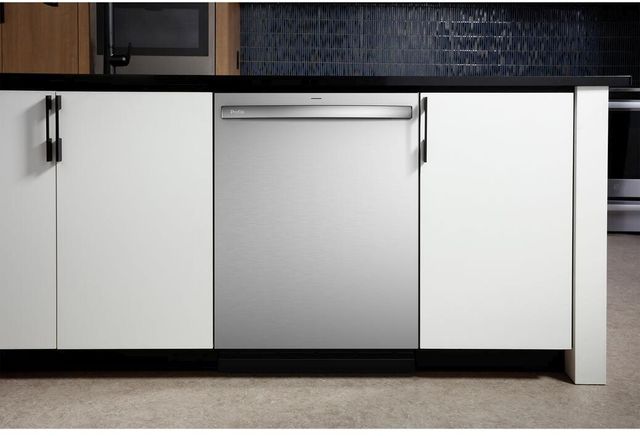
Run the decision in this order and it stays simple: confirm the opening first, then settle capacity, then pick features and finish. People who reverse that order fall for a machine and then find out it does not fit.
Match Your Situation to a Size
- Small apartment or condo kitchen: an 18-inch compact keeps a full base cabinet available for storage.
- Galley kitchen with limited door-swing room: stay standard width but check the 27 inches of floor clearance and consider a pocket handle over a bar handle.
- Family of four in a modern build: a standard 24-inch built-in with a third rack is the sweet spot.
- Entertainer with a large open kitchen: 14 or more place settings, and weigh the decibel rating heavily since the machine will run while people are talking nearby.
- Accessible or aging-in-place kitchen: ADA-height or a double drawer, both of which reduce bending.
- Bars, guest suites, and outdoor kitchens: a single drawer or compact unit near the prep area, rather than walking dishes to the main kitchen.
Beyond the tape measure, a few size-adjacent factors deserve a look. Decibel rating matters far more in an open-concept floor plan than in a closed kitchen. Drying technology separates models that leave plastics wet from models that do not. Panel-ready designs add door thickness, so factor that into depth. And matching finish and handle style across your suite keeps the whole run looking deliberate.
Screenshot this before you shop: three opening measurements, confirmation that the floor is finished, utility locations, door swing clearance, and your household place-setting target. Those five items answer nearly every question a salesperson needs to narrow the field. After that, go put your hands on the racks, because loading feel and rack layout are close to impossible to judge from a spec sheet.
The Half-Inch Budget: Where Your Cutout Clearance Actually Goes
Most failed installs are not off by inches, they are off by fractions that stacked up. Think of your opening as a clearance budget you spend down. Start with the manufacturer’s stated cutout requirement, then subtract every real-world condition your kitchen adds, and see what is left. In a 1970s Arlington kitchen with new tile and a thick granite slab, that budget can go negative before the box is even opened, while a 2019 Prosper build usually has slack to spare. Run the subtraction before you buy, not after the truck arrives.
- New flooring: a quarter to three-quarters of an inch off your height, depending on tile plus thinset or LVP plus underlayment.
- Countertop substrate: plywood or particleboard under a stone slab can take another half inch off the top of the opening.
- Leveling legs at minimum height: the unit still needs its lowest setting to clear, so verify the collapsed height, not the nominal height.
- Countertop overhang and backsplash thickness: both eat depth at the top of the opening even when the cabinet depth is fine.
- Custom door panel on a panel-ready model: adds three-quarters of an inch or more of thickness in front of the door face.
- Out-of-square cabinet openings: common in older DFW homes, where the rear of the opening measures narrower than the front by a quarter inch or more.
Read more:
Top Dishwashers by Size Available at Texas Appliance
Every model below is a standard 24-inch built-in, because that is the opening the large majority of kitchens have, and it is where the best selection of features and finishes lives. If your measurements pointed you toward an 18-inch compact or a drawer configuration instead, our team can walk you through those options in the showroom or by phone. What separates these six is control style, finish, and feature tier, so read them against the fit variables covered above.
Café 24” Fingerprint Resistant Stainless Steel Top Control Built-In Dishwasher
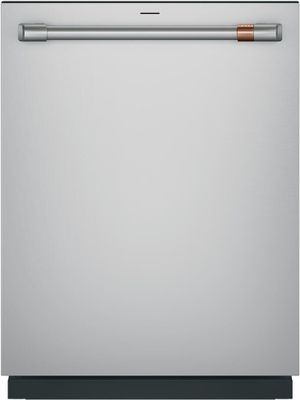
Kitchens where the appliance run is part of the design belong here. Top control means the buttons live on the upper edge of the door, so the face you see is one clean stainless panel with nothing breaking the line. That matters in an open-concept plan where the dishwasher sits in your sightline from the living room. The fingerprint resistant finish holds up to a busy family. Standard 24-inch dimensions and adjustable leveling legs give an installer about an inch of height play to meet a countertop that is not perfectly level.
Top Features
- Top control panel: Controls sit on the door edge, leaving an uninterrupted stainless face in open kitchens.
- Fingerprint resistant finish: Cuts down on smudges in the highest-traffic spot in the kitchen.
- Standard 24-inch footprint: Drops into a modern builder cutout without cabinet modification.
- Adjustable leveling legs: Roughly an inch of height adjustment to meet the counter and clear the toe kick.
GE Profile 24” Fingerprint Resistant Stainless Steel Built-In Top Control Dishwasher
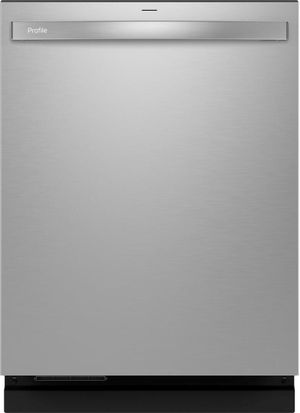
A newer build in Frisco, Celina, or Mansfield almost certainly has a textbook 24-inch cutout, and this GE Profile is built for exactly that opening. It is the mainstream upgrade pick, pairing a hidden top control panel with a fingerprint resistant stainless finish that matches the rest of a GE Profile suite. Because the controls are on the door edge, the visible face is flat, and only the handle projects into the walkway. In a narrow galley, that slim profile is worth measuring for before you commit to a bar handle style.
Top Features
- Hidden top controls: Keeps the door face clean and puts the settings out of reach of curious kids.
- Fingerprint resistant stainless steel: Wipes down easily and stays consistent across a matching appliance suite.
- Built for a standard cutout: Sized for the 24-inch openings found in nearly every modern DFW build.
- Minimal face projection: Only the handle extends past the cabinet line, which helps in tight walkways.
KitchenAid 24” Panel Ready Built-In Dishwasher
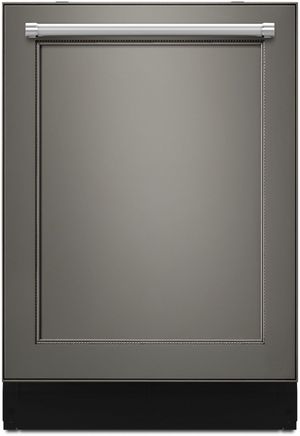
When the goal is a kitchen where the dishwasher disappears into the cabinet run, this is the one to spec. A panel-ready model accepts a custom door panel cut to match your cabinetry, which is why designers reach for it in high-end remodels. Two fit details from earlier apply directly. The finished panel adds thickness in front of the door, so account for it in your depth measurement, and the panel has a weight limit that your cabinet shop needs before it builds the door. Bring both numbers when you order.
Top Features
- Panel-ready door: Accepts a custom cabinet front so the dishwasher blends into the surrounding run.
- Standard 24-inch width: Fits a conventional cutout while changing only the visible face.
- Depth planning built in: The custom panel adds thickness, which is easy to plan for and expensive to discover late.
- Panel weight specification: Give your cabinet maker the allowance so the door hangs and closes correctly.
KitchenAid 24” PrintShield Stainless Steel 360 Max Jets Third Rack Top Control Built-In Dishwasher with Advanced ProDry System
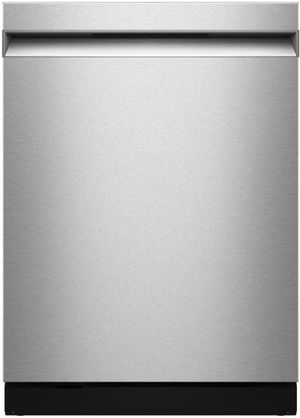
Large households and frequent entertainers should start here. The third rack is the feature that pushes a standard 24-inch tub toward the top of its place-setting range, since flatware and small utensils move up top and free the basket below. Remember the trade covered earlier: a third rack occupies height, so tall stemware and stockpots need the upper rack lowered or laid differently. The Advanced ProDry system tackles the wet-plastics complaint, and the PrintShield finish keeps a busy family kitchen looking clean.
Top Features
- Third rack: Adds a shallow top tray for flatware and utensils, raising usable capacity without changing the footprint.
- 360 Max Jets coverage: Directs spray around the tub so loaded racks get reached from multiple angles.
- Advanced ProDry System: Targets the damp plastic containers that most dishwashers leave behind.
- PrintShield finish: Resists smudges and fingerprints on a door that gets touched a dozen times a day.
Whirlpool 24” Stainless Steel Front Control Built-In Dishwasher with Boost Cycle
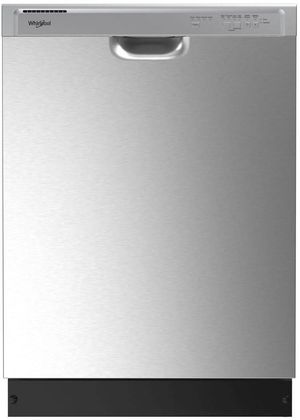
Shop Front Control Dishwashers
Straight replacements in older DFW kitchens are where this Whirlpool earns its spot. Front control puts the buttons on the visible face of the door, so you can start a cycle without opening it, and you can see at a glance whether it is running. That visible panel changes the look of the appliance face, which is a preference call rather than a performance one. The Boost cycle speeds up a load when dinner is coming. Standard 24-inch dimensions and leveling legs handle a slightly out-of-square older opening.
Top Features
- Front control panel: Buttons on the door face let you start and check a cycle without opening the door.
- Boost cycle: Shortens wash time when you need dishes back before guests arrive.
- Standard 24-inch build: A direct swap for an existing built-in opening in an older home.
- Adjustable leveling legs: Squares the unit up in cabinet openings that are no longer perfectly true.
Bosch 300 Series 24” Anti-Fingerprint Stainless Steel Front Control Built-In Dishwasher
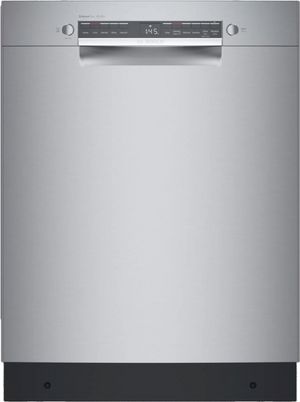
Shop Front Control Dishwashers
Quiet operation is the reason Bosch keeps coming up in open-concept kitchens, and the 300 Series is the brand’s most popular tier. Front control gives you a readable panel on the door face, which some households prefer over hidden controls. The anti-fingerprint stainless finish handles daily traffic. Fit-wise, this is a standard 24-inch built-in, so the questions that matter are the ones from the measuring section: your finished floor height, your usable depth behind the countertop overhang, and whether the open door clears an opposite cabinet in a galley.
Top Features
- Front control layout: A visible panel on the door face for at-a-glance cycle status.
- Anti-fingerprint stainless steel: Keeps the front looking clean in a high-traffic kitchen.
- 300 Series build: Bosch’s most popular tier, known for quiet operation in open floor plans.
- Standard 24-inch dimensions: Fits a conventional cutout, with leveling legs for final height adjustment.
Ready to Lock In Your Dishwasher Size? Visit Texas Appliance Today
Measure the cabinet opening for width, height, and depth before you shop, and let the smallest number decide. Know where the standard 24-inch dishwasher size fits and where a compact, ADA-height, or drawer model solves a problem a standard unit cannot. Then match place-setting capacity to how your household actually cooks, and the shortlist writes itself.
Shop dishwashers at Texas Appliance online, or bring your three measurements to a Dallas–Fort Worth showroom and let a specialist check them against real spec sheets before you spend a dollar. Our own installers handle the water line, the drain loop, the electrical connection, and the mounting brackets the right way, and our in-house service department is here locally years after the sale. That combination is what an independent DFW retailer offers that a warehouse checkout page cannot. Stop by an Arlington or Fort Worth area showroom, or call and describe your cabinet opening to an appliance expert today.
Frequently Asked Questions about Dishwasher Sizes
The standard dishwasher size is approximately 24 inches wide, 24 inches deep, and 34 to 35 inches tall. Those dimensions match American base cabinet depth and the opening left under a 36-inch finished countertop, which is why nearly every kitchen is built around them.
No, dishwashers come in several size families including standard 24-inch, compact 18-inch, ADA-height, drawer, oversized, and portable models. Exterior dimensions and interior place-setting capacity vary independently, so two units with the same 24-inch width can hold noticeably different amounts.
Measure the cabinet opening width at its narrowest point, the height from the finished floor to the lowest point under the countertop, and the depth from the back wall to the cabinet face. Always measure the opening rather than the old dishwasher, and use the smallest number you record as the governing dimension.
Yes, an 18-inch dishwasher can go into a 24-inch opening using a trim kit, a filler strip, or a narrow cabinet infill to close the extra six inches. The result only looks intentional when the filler is finished to match the surrounding cabinet run, so plan that detail before installation day.
Plan on roughly 6 to 9 place settings for one or two people, 9 to 12 for a family of three or four, and 12 or more for larger households and frequent entertainers. Rack design affects real usable space more than exterior width, so compare interiors rather than trusting the number alone.
A standard 24-inch built-in dishwasher measuring 34 to 35 inches tall fits under a standard 36-inch countertop. Adjustable leveling legs provide about an inch of height adjustment, and an ADA-height model near 32 inches tall is the fix when new flooring or a thick substrate shortens the opening.
Why Trust Texas Appliance?
With roots back to the 1950s, Texas Appliance is an established, locally owned and operated, residential major appliance retailer serving both residential and builders’ needs. Our 4 locations allow us to offer a full spectrum of appliances to meet your every need. With over 40 major quality brands, Texas Appliance has one of the largest displays of built–in and free–standing appliances in the state of Texas.
We will be the best appliance dealer in our markets by exceeding our customers' expectations in every way. We will treat our customers, vendors and fellow employees with respect, honesty, integrity and appreciation. The difference between a "Good" company and a "Great" company lies in its' employees' determination.
Shop Dishwashers at Texas Appliance
Stop by Texas Appliance’s Fort Worth Store and Outlet locations to see what a difference buying local with an experienced staff can make. Or shop Mattresses online! Our friendly experts are always happy to help you find the best Sealy mattresses for your bedroom — whether you call us at 817-299-2800, use our online chat feature, or visit us in person.